

When a foundational structure fails, settles, or requires modification for deeper excavations, you cannot afford guesswork. At SJ Hauck Construction, specialized foundation underpinning is an engineered discipline. We don’t just patch cracked concrete; we strengthen, stabilize, and permanently transfer building loads to competent load-bearing strata. We work closely with our clients to protect their real estate investments from devastating foundation movement.
Leveraging our premier background as structural moving and lifting specialists, our team brings unmatched stability and load-path certainty to every project. As a leading underpinning contractor, we deliver the precision engineering your commercial construction demands. Whether you need to stabilize a settling structure, support a vertical expansion, or facilitate deeper foundation construction, or seeking professional advice to rectify severe foundation issues, we deploy tailored underpinning services to permanently secure your asset.
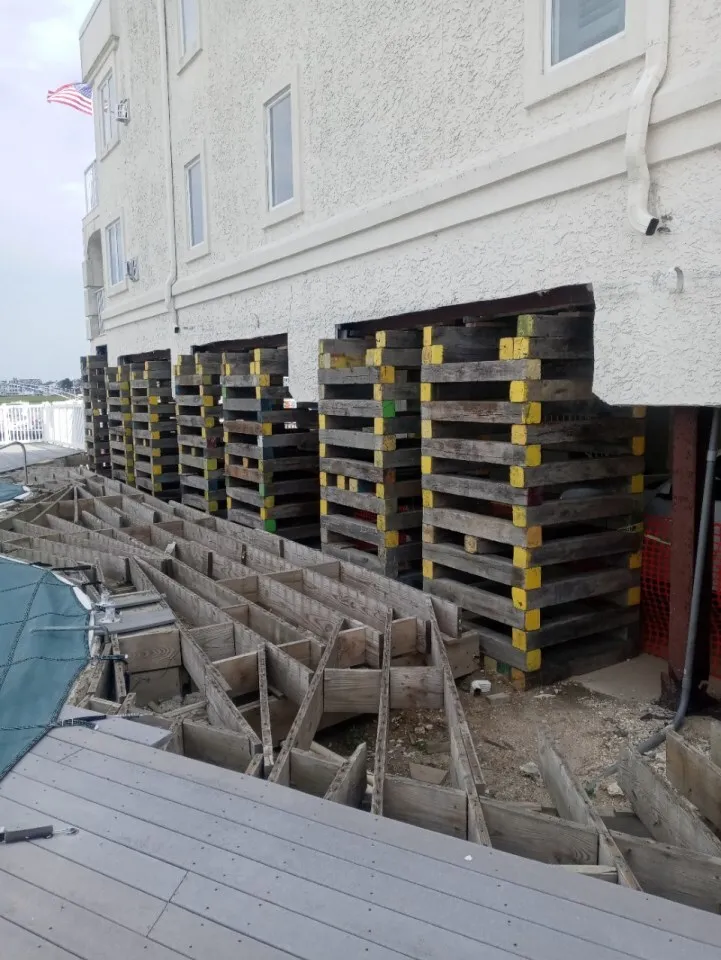
Every instance of structural movement or excavation challenge requires a specific, calculated engineering strategy. Changing soil conditions, weak ground layers, or renovations that increase a building’s overall weight can drastically compromise an original foundation. SJ Hauck deploys specialized equipment to execute targeted Commercial Foundation Underpinning across a variety of commercial buildings:

Foundation Settlement Rectification
Stabilizing, leveling, and reinforcing structures showing common signs of distress, such as structural cracks in masonry walls, bowing slabs, or sticking doors and windows.

Deep Basement Expansion Projects
Extending foundation systems to safely accommodate deeper excavations and new below-grade construction.

Vertical Expansion & Renovations
Modifying an existing commercial facility or business complex to add floors, requiring added support that the original foundation cannot handle.

Soil Degradation & Subsidence Repair
Comprehensive remediation when shifting soil, high water tables, or broken underground utilities erode the ground directly beneath concrete walls.
Depending on the specific structure, engineering demands, and soil reports, selecting the proper underpinning methodology is critical to long-term safety. A qualified Underpinning Contractor must evaluate the site’s unique requirements before specifying materials or installation techniques. SJ Hauck specializes in several industry-leading foundation underpinning solutions:
The traditional, time-tested method where our team excavates sequential pits beneath the existing foundation and fills them with concrete. This process relies on extending the foundation depth down to a more stable soil layer without compromising the upper structure.
Perfect for restricted-access environments, low headroom, and high-load commercial facilities. We drive or drill high-capacity steel piles deep into competent strata or bedrock to anchor settling walls and stabilize structural weight.
Utilized when internal access to the building or basement is entirely restricted. We install external steel needle beams through structural walls to transfer load paths safely during foundation underpinning reinforcement.
Ideal for a building experiencing distress from shifting topsoil layers or surface moisture. These specialized piles are screwed mechanically deep into the ground, providing immediate added support and load-bearing capabilities with minimal vibration.
Executing safe foundation underpinning requires a rigorous, highly sequential process. We eliminate structural risk, protect your property value, and shield your business from liability through a strict, 5-step engineering plan.
Before a single shovel touches the dirt, we evaluate soil boring reports and existing foundation schematics. Our engineering team maps the building’s current weight distribution to determine the precise depth required to reach competent load-bearing soil or bedrock.
Temporary support systems may be installed as needed to maintain structural stability while underpinning work is performed. These measures help protect the building during excavation and load-transfer operations.
We utilize a strict “legs and spaces” protocol. We do not excavate beneath an entire foundation at once. Instead, our crew digs isolated, strategically spaced pits (typically 3 to 4 feet wide) in a predetermined sequence to ensure the building remains fully supported by unexcavated earth.
Once a pit reaches its engineered depth, we install structural reinforcement rebar and pour high-strength concrete to within a few inches of the existing foundation underside. After the concrete cures, we pack the remaining gap with an expansive, non-shrink grout to lock the new foundation seamlessly to the old structure.
With all sequential underpinning pins completely cured, the temporary shoring systems are carefully decommissioned. The building’s structural load is safely and permanently transferred down to its new, reinforced footprint, delivering a permanent solution to past settlement issues.
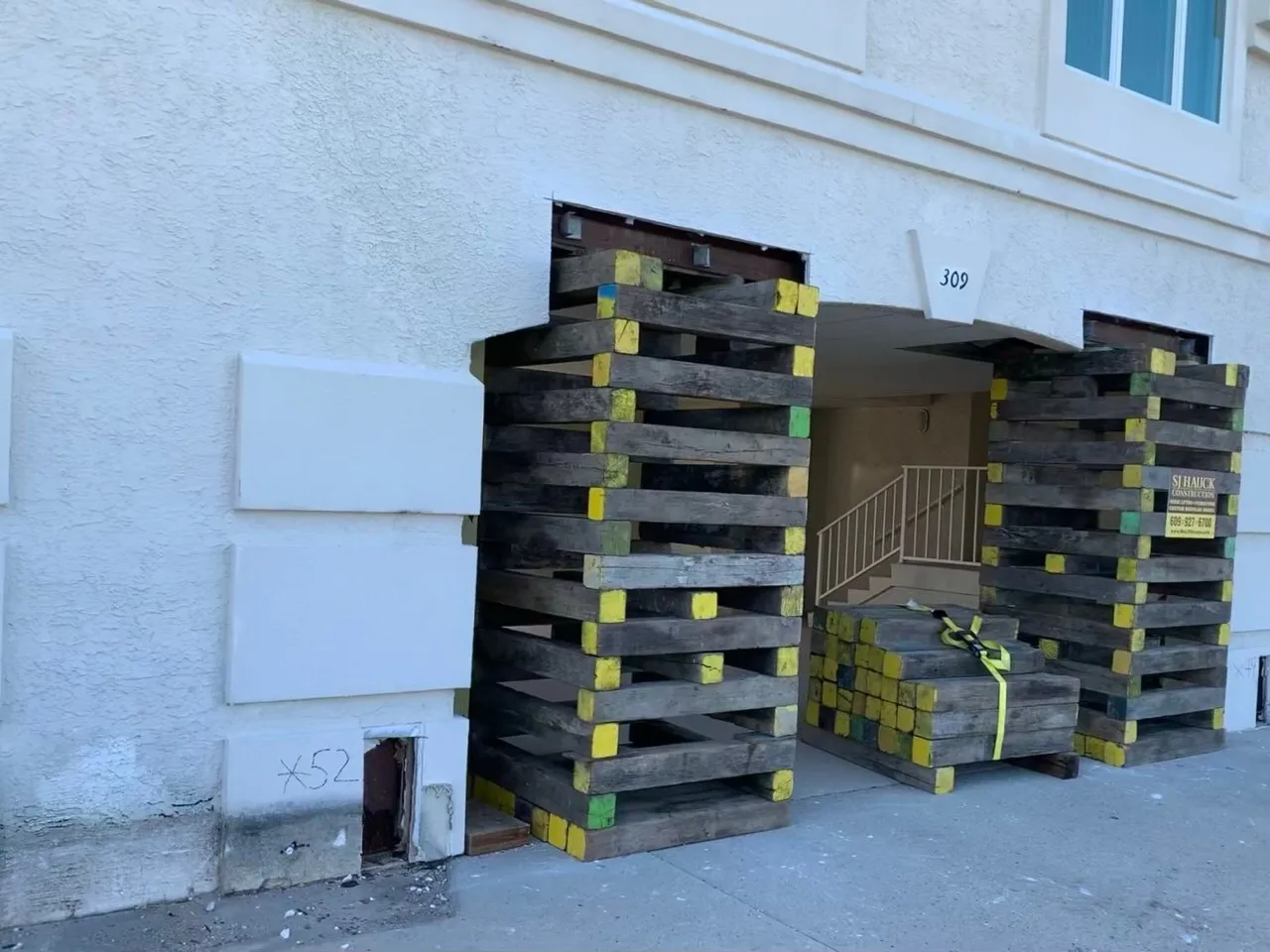
SJ Hauck’s reputation for specialized underpinning services, commercial construction support, and structural repair takes our crews well past our Egg Harbor Township, NJ headquarters to serve high-stakes engineering projects across the region.
We provide comprehensive Commercial Foundation Underpinning and structural shoring services statewide:
For complex commercial engineering projects, historic preservations, or industrial renovations requiring elite load-path certainty, we mobilize our specialized Underpinning Contractor crews, heavy equipment, and hydraulic systems across state lines. SJ Hauck routinely serves projects throughout Pennsylvania, Delaware, and New York.

The most typical signs of foundation issues include visible diagonal cracks in interior or exterior brick walls, doors that fail to latch, windows that stick in their frames, and uneven or sloping interior floor surface zones. If you notice these signs, it is wise to seek professional advice immediately to evaluate the structure.
Shoring and underpinning are both structural support methods, but they serve different purposes. Shoring provides temporary support to structures or excavations during construction to prevent collapse or movement, while underpinning is a permanent solution used to strengthen, stabilize, or deepen an existing foundation. In some projects, both methods are used together to ensure safety during construction and long-term structural stability afterward.
An engineer will evaluate the overall weight of the structure, site access limitations, and a geotechnical soil report. Heavy commercial buildings requiring deep bedrock access generally require high-capacity steel piles, while shallower soil remediation might utilize traditional mass pour concrete pits to reach a stable depth.