
When surface-level soil lacks sufficient bearing capacity to support structural loads, SJ Hauck Construction provides engineered deep foundation systems to ensure long-term structural integrity. As a leading commercial structural contractor in the Northeast, we specialize in transferring axial and lateral loads from the superstructure through unstable or compressible soil layers to deeper, more competent strata or bedrock.
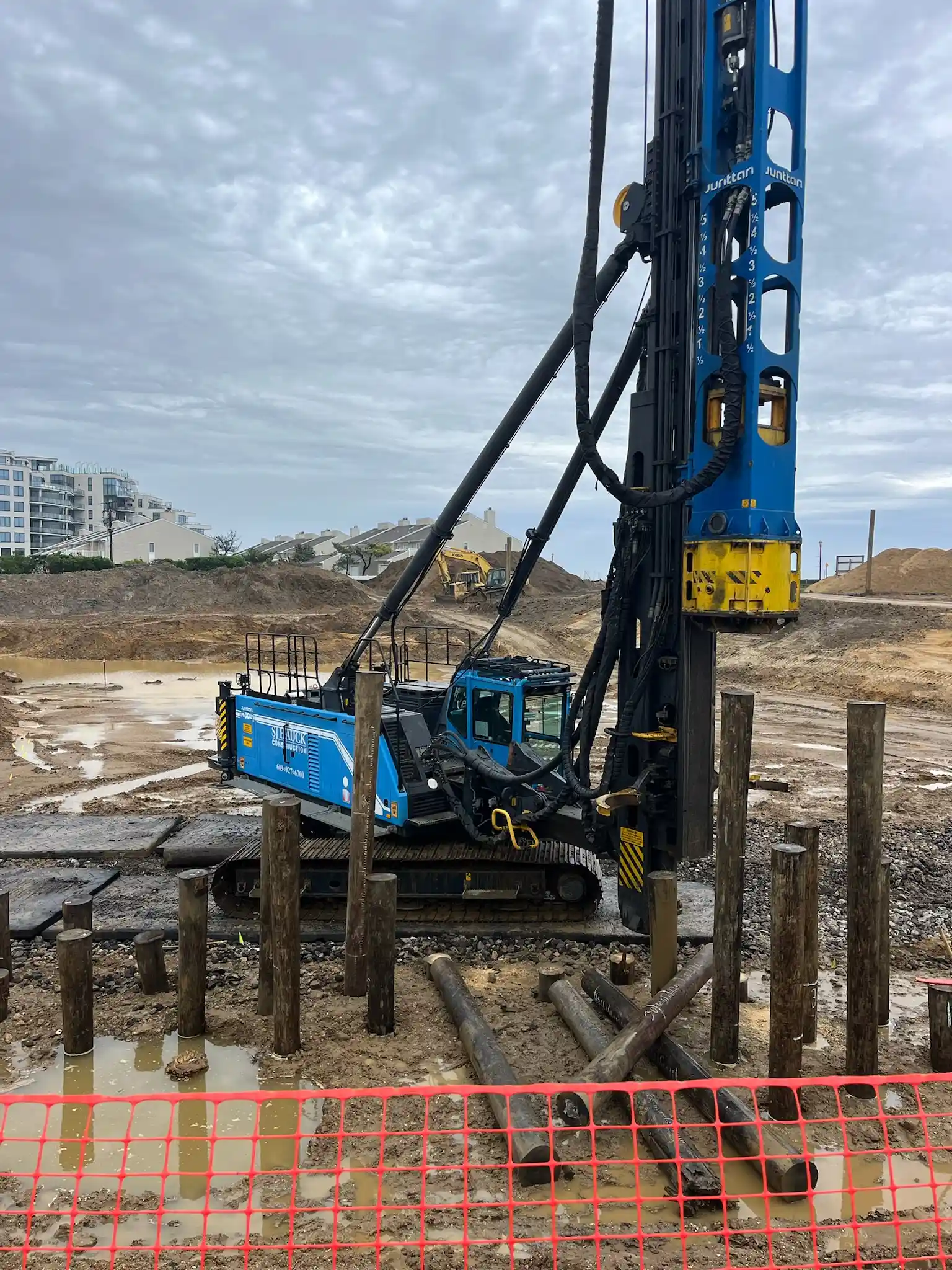
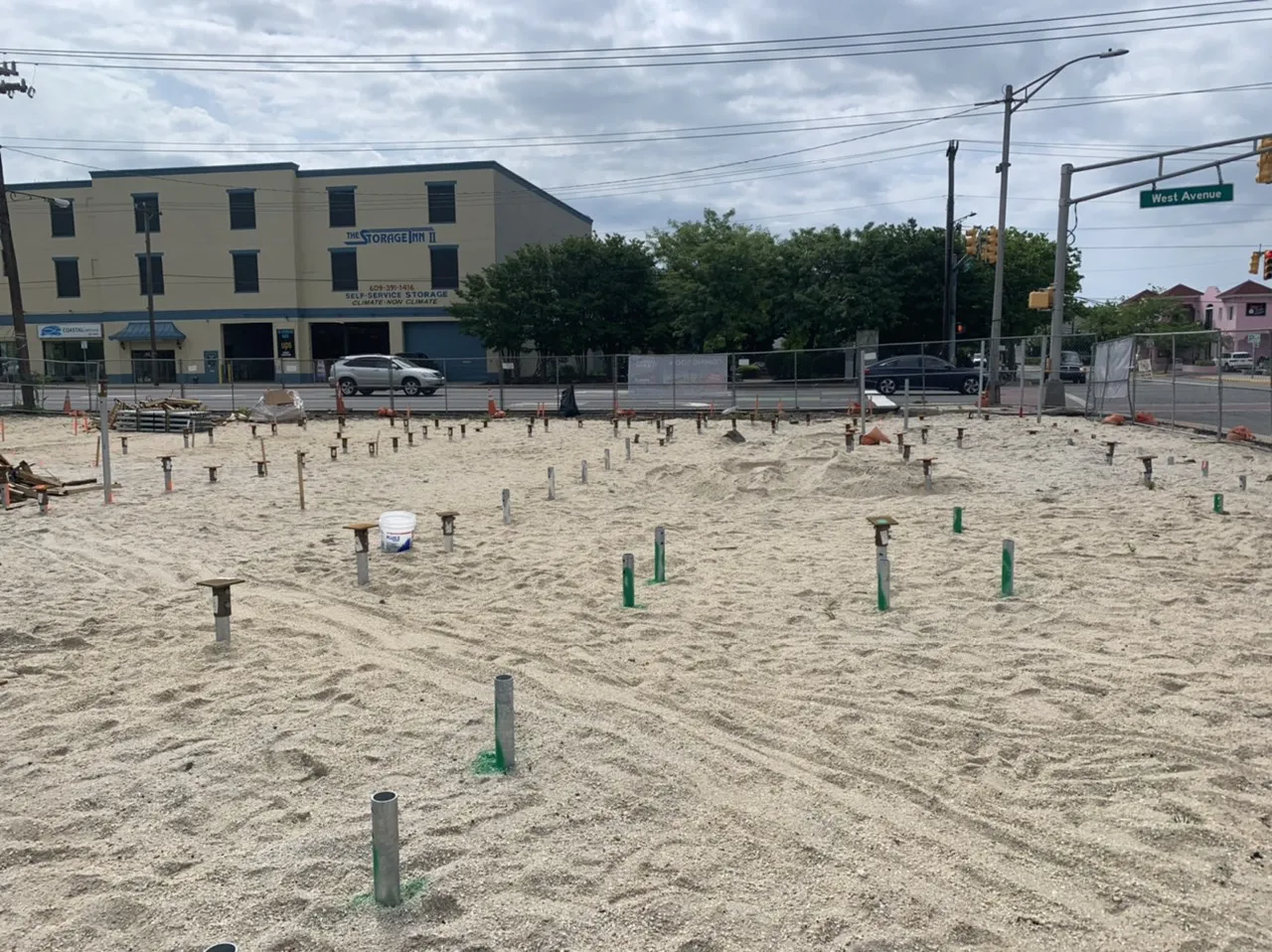
Ideal for sites with limited access or vibration sensitivities, helical piles offer rapid installation for light-to-medium commercial loads with minimal site disturbance. These systems consist of a central steel shaft with helical bearing plates that are “screwed” into the ground using hydraulic torque motors.
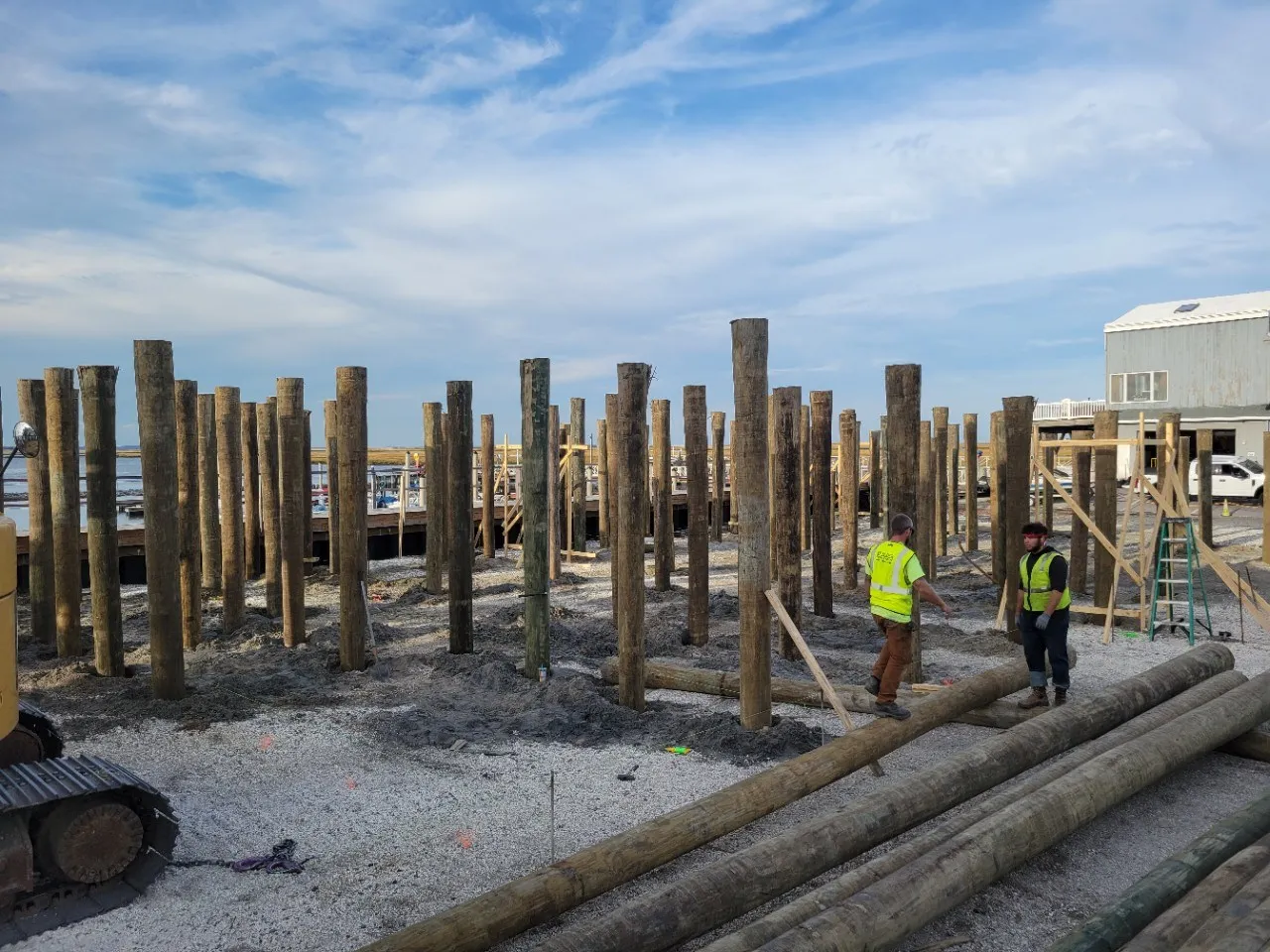
A cost-effective, time-tested solution, timber piles are primarily used for permanent underwater applications or friction-based support in consistent, cohesive soils.
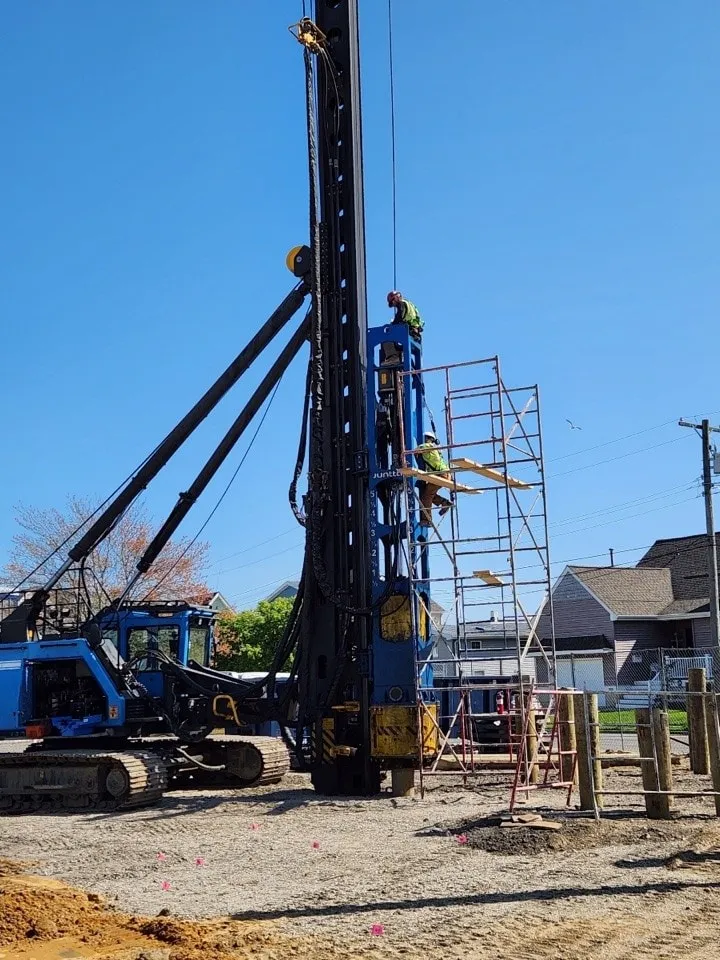
Preferred for high-durability requirements and corrosive environments, concrete piles provide immense compressive strength for massive, long-term structural loads.
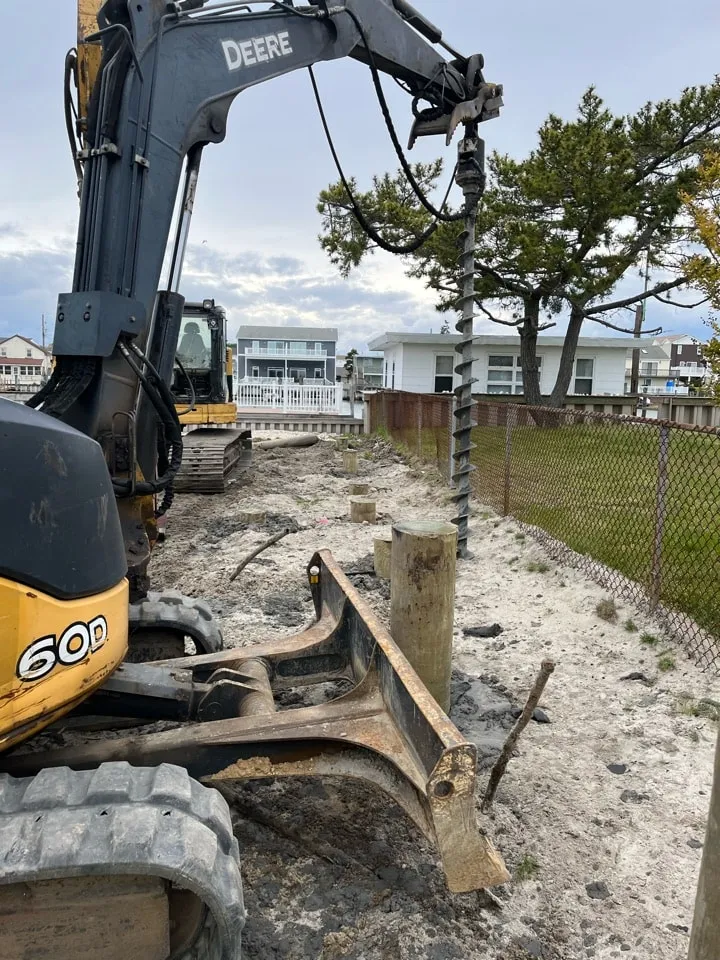
Best suited for high-capacity loads and deep penetration, steel pipe piles offer high structural strength and the ability to be driven into dense soil or rock.
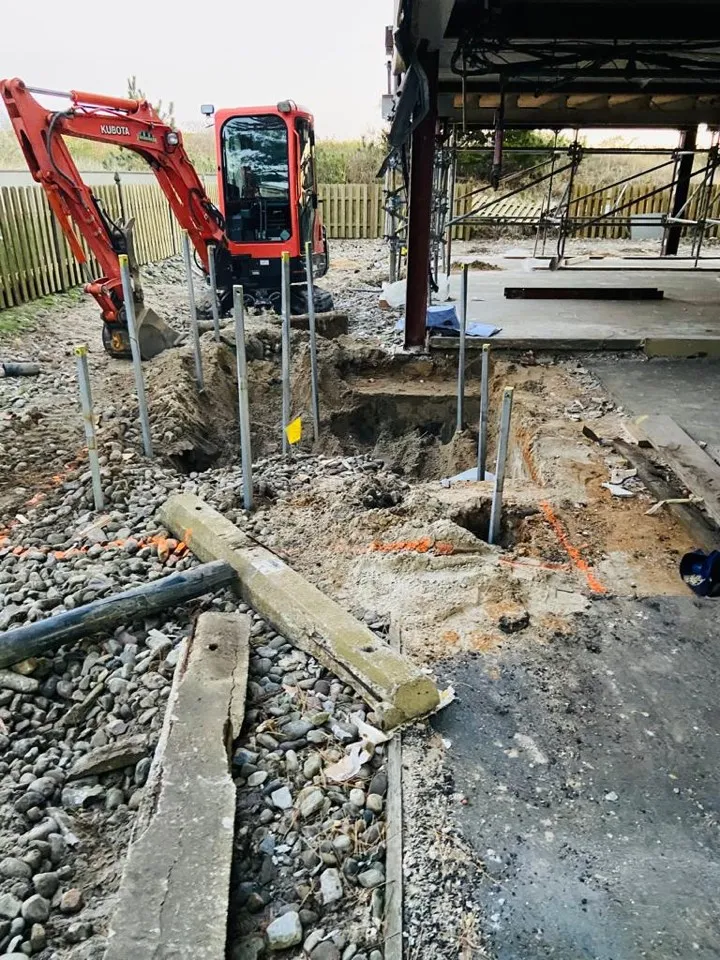
Engineered for extreme conditions, H-piles act as heavy-duty end-bearing piles capable of piercing through tough obstructions—such as boulders or dense debris—to reach solid bedrock.
| Pile System | Installation Method | Noise/Vibration Level | Typical Depth Range | Key Engineering Differentiator |
|---|---|---|---|---|
| Helical Piles | Hydraulic Rotation (Screwed) | Negligible | 10' – 100'+ | Instant load verification via torque-to-capacity correlation. |
| Timber Piles | Impact or Vibratory Hammer | High | 20' – 60' | High "setup" (freeze) potential in silty/clay soils over time. |
| Concrete (CFA/Bored) | Auger Drilling & Pressure Grout | Low | 30' – 150' | Eliminates risk of vibration damage to adjacent historic footings. |
| Concrete (Prestressed) | Impact Driving | High | 30' – 100' | Highest axial stiffness; ideal for aggressive saltwater splash zones. |
| Steel Pipe Piles | Impact or Vibratory Hammer | High | 40' – 200'+ | Can be driven "open-ended" to cut through thin rock layers. |
| H-Piles | Impact Driving | Moderate | 40' – 200'+ | Minimal "ground heave"—won't lift adjacent slabs during driving. |
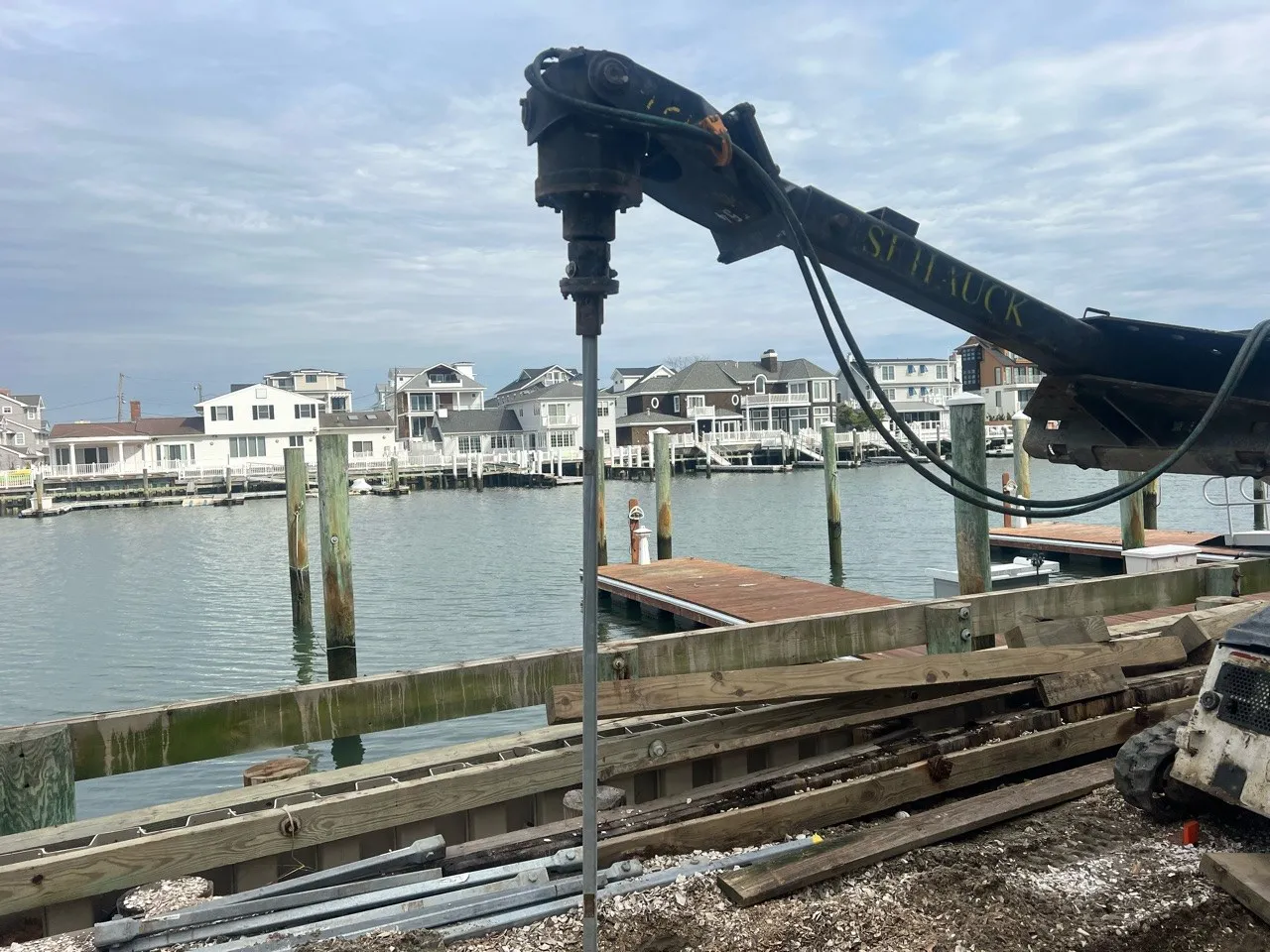
SJ Hauck Construction is strategically positioned to handle the complex geotechnical demands of the Northeast corridor. While we are a regional authority with deep roots in the Mid-Atlantic, our specialized deep foundation capabilities allow us to mobilize for high-complexity projects nationwide.
For select commercial and industrial scopes, including structural lifting, complex underpinning, and specialized helical installations, we offer nationwide service. Our team is equipped to transport specialized rigs and engineering expertise to any site where conventional foundation methods are insufficient.
Underpinning or deep foundations are typically required when a foundation shows signs of distress—such as settling cracks or uneven floors—or when the building’s load-bearing requirements change. Common triggers include adding additional stories, installing heavy industrial machinery, or when surface soils are too weak to support a new build.
Geology is the primary driver for system selection. For example, the clay-rich soil and high water tables require water-tight solutions such as secant pile walls. In contrast, the sandy soils of coastal Delaware or southern New Jersey often require deep foundation systems like helical piles to reach competent bearing strata.
Displacement piles (like timber, precast concrete, and helical piles) are forced into the ground, displacing and often densifying the surrounding soil. Replacement piles (like bored concrete shafts) involve excavating soil and replacing it with steel and concrete. Displacement piles are often more cost-effective because they eliminate the need to dispose of excavated spoils.
Yes. Local building codes, such as the NYC Administrative Code and the New Jersey Uniform Construction Code, mandate that any excavation deeper than an adjacent foundation must be supported to protect neighboring property. These designs often require a professional engineer’s (PE) seal and regular monitoring.
We prioritize precision through Non-Destructive Testing (NDT) and Pile Dynamics Analysis (PDA). For helical piles, we use a torque-to-capacity correlation that provides real-time data during installation. For driven piles, capacity is verified via blow count monitoring and high-strain dynamic testing.