

When your commercial or industrial project demands immense compressive strength, structural rigidity, and long-term durability under extreme loads, SJ Hauck Construction delivers engineered concrete piling systems designed to perform. Operating as a leading structural contractor throughout the Northeast and Mid-Atlantic, we specialize in advanced concrete deep foundation techniques engineered to bypass weak surface soils and transfer massive axial and lateral loads directly to solid bedrock or competent strata.
Whether navigating vibration-sensitive urban sites or highly corrosive coastal environments, our engineering-first approach ensures your project’s foundation endures for generations in your community.
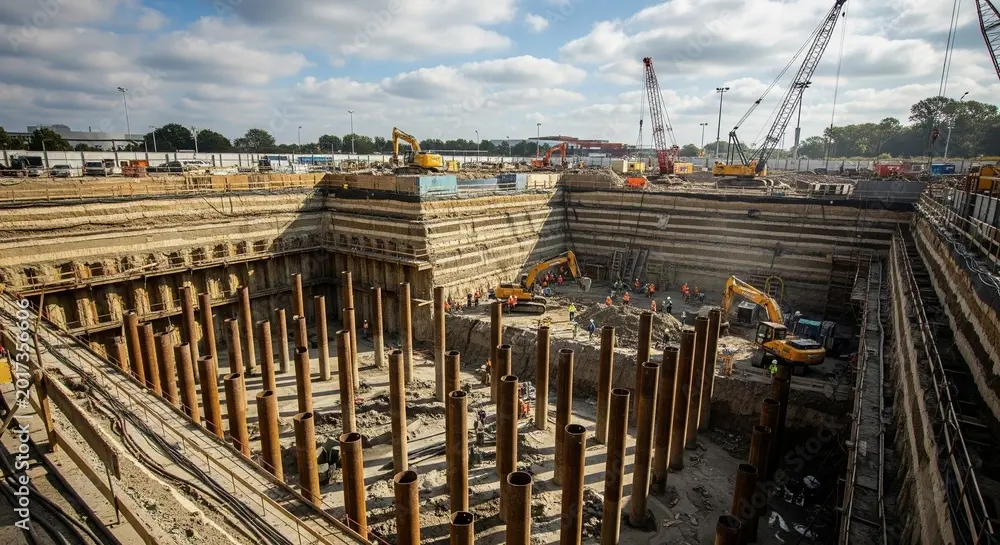
Not all soil strata or project footprints are created equal. SJ Hauck utilizes a range of deep foundation concrete pile methodologies to match the exact structural load specifications, soil profiles, and environmental constraints of your job site.
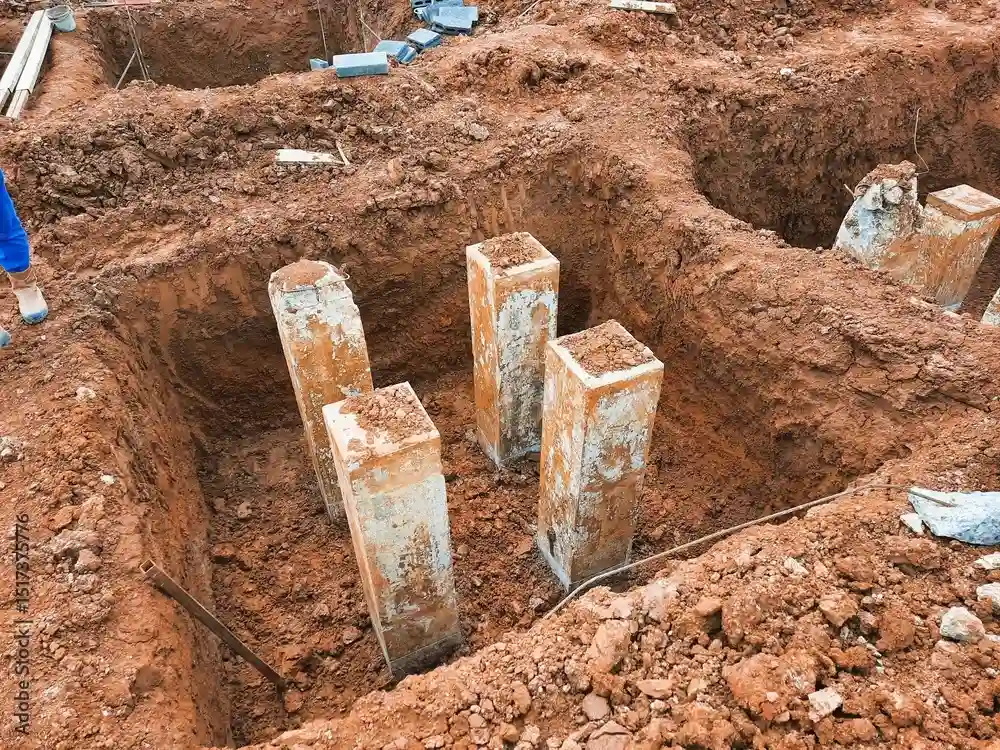
For heavy industrial infrastructure, bridge abutments, and high-capacity commercial structures that must support heavy loads, prestressed concrete piles represent the pinnacle of high-durability deep foundations.
Prestressed Technology: These high-strength concrete piles are manufactured with internal steel cables placed under tension before the concrete cures. They are precast concrete piles produced off site before being driven into the ground. This places the concrete in a permanent state of compression, providing superior resistance to bending forces and the harsh impact stresses from installation with impact or vibration hammers. Driven piles are typically installed by hammering or vibrating them into the ground, which displaces soil and densifies the surrounding material, making them suitable across a wide range of soil conditions.
Corrosion Resistance: Prestressed piles have highly dense concrete matrices that resist water penetration, making them the industry gold standard for moisture-prone environments. In load transfer, end bearing piles rest on a hard layer while friction piles develop resistance along the entire surface in contact with the surrounding soil.
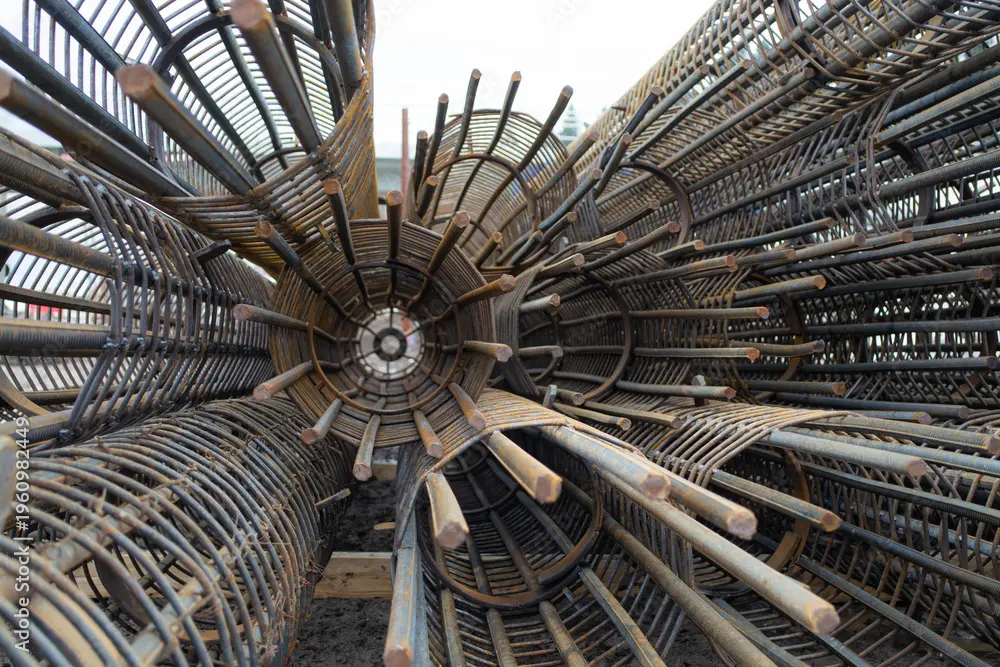
When projects require minimal noise disruption and zero vibration transfer to neighboring buildings, CFA-based bored pile foundations are the ideal choice.
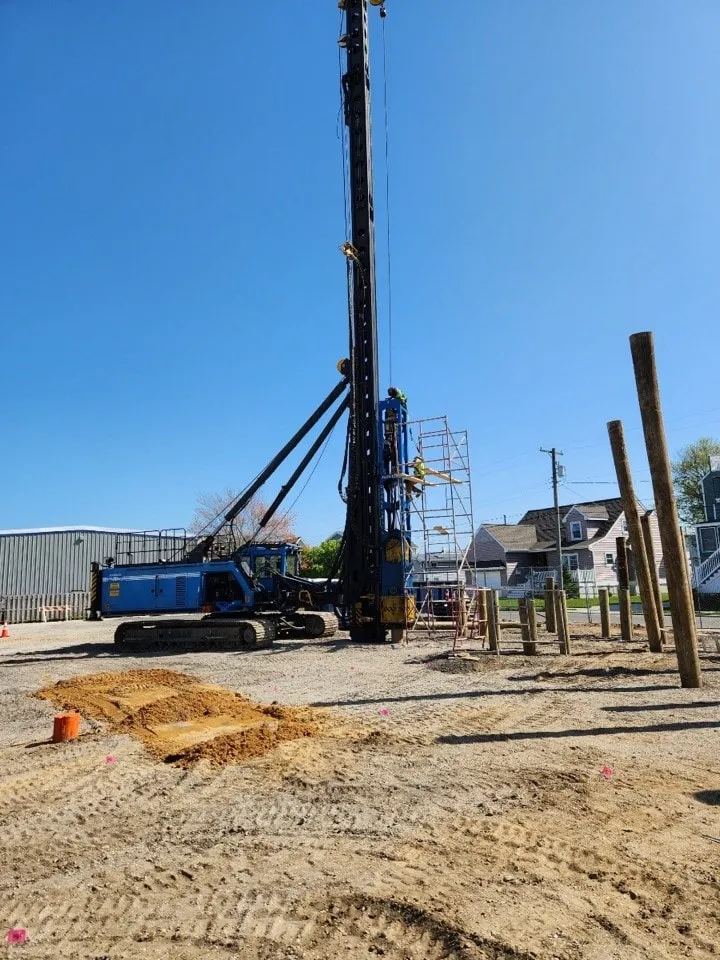
Deep excavation for commercial basements, subterranean parking garages, and transport infrastructure requires specialized geotechnical solutions that offer both structural retaining power and moisture barrier protection, and pile foundations are often used when deep excavation is impractical because of high water tables or nearby structures.
Choosing concrete piling systems over timber or steel as common piling materials offers distinct structural advantages for high-complexity builds:
1 Unmatched Compressive Strength
Concrete piles possess massive cross-sectional areas that provide unparalleled axial stiffness, allowing them to support heavy building loads in high-rise buildings and industrial machinery.
2Longevity in Aggressive Soils
Unlike steel piles, which are vulnerable to rust and oxidation, or timber piles, the earliest form of piling in historical use, which require permanent submersion to prevent biological decay, engineered concrete resists chemical attack from acidic soils and coastal brackish water. Steel in aggressive soils or moisture-exposed conditions may also require added corrosion protection.
3High Lateral Stiffness
For projects subject to heavy building loads and heavy lateral forces—such as high-wind coastal areas or seismic zones—the combined strength of reinforced concrete and internal steel cages provides maximum resistance against buckling and shearing, making them widely used for industrial facilities.
| Concrete pile types | Primary Installation Method | Noise / Vibration Impact | Typical Depth Range | Key Structural Advantage |
|---|---|---|---|---|
| Prestressed Concrete | Impact Driving Hammer for precast piles | High | 30’ – 100’ | Highest axial stiffness; ideal for aggressive marine splash zones. |
| Bored Piling (CFA / Cast-in-Situ) | Auger Drilling & Pressure Grout for drilled piles | Low / Negligible | 30’ – 150’ | Completely eliminates vibration risks to adjacent historic footings. |
| Secant & Tangent Walls | Rotary Drilled Interlocking Shafts | Low to Moderate | 40’ – 120’ | Provides simultaneous structural earth retention and water-tightness. |
Geology and regional regulations dictate deep foundation design. SJ Hauck possesses deep logistical and geotechnical experience navigating the challenging soil profiles of the Northeast corridor, while maintaining the specialized rig fleet required to mobilize nationwide.
For complex commercial and industrial scopes requiring advanced concrete piling methods, specialized structural lifting, or complex underpinning, SJ Hauck mobilizes nationwide for broader pile construction requirements on any large construction project. Our team transports specialized drilling rigs, equipment for driven piles and bored installations, and dedicated geotechnical supervisors directly to your site.

The choice comes down to environmental constraints and soil conditions. Driven prestressed piles are highly cost-effective and provide immediate high-load capacity, but their installation creates significant noise and ground vibration. Bored concrete piles (CFA) are selected for urban zones, tight properties, or adjacent to historic structures because drilling generates negligible vibration and very little noise.
For driven prestressed concrete piles, we utilize Pile Dynamics Analysis (PDA) testing and strict blow-count monitoring during the driving process to measure the high-strain dynamic capacity of a single pile, confirming its role in transferring loads safely to deeper bearing strata. For bored concrete shafts (CFA), capacity is verified through strict engineering oversight of the drilling logs, concrete pressure monitoring during pump extraction, and post-installation Non-Destructive Testing (NDT) to ensure shaft integrity.
Driven prestressed concrete piles are displacement piles and often act as bearing piles, transferring loads by end bearing or skin friction while pushing aside and densifying the surrounding soil, which can cause ground heave. Bored concrete piles are replacement piles—the soil is physically removed via auger excavation and replaced with concrete, which prevents ground heave but requires the management and disposal of excavated soil spoils; by contrast, displacement methods can reduce environmental impact on some sites by avoiding the removal of contaminated soils. Where project requirements differ from concrete, driven options can include steel h piles, steel pipe piles, or screw piles. For unusual lengths or site conditions, a composite pile may be used, sometimes with pile joints or mixed materials.
Yes. Due to the high weight loads associated with concrete piling, the pile cap coordination required, and the depth of the excavations, projects in the Northeast must comply with strict municipal frameworks (such as the NYC Administrative Code and the NJ Uniform Construction Code). All concrete piling plans must feature a Professional Engineer’s (PE) seal, and excavations often require rigorous monitoring of adjacent structures, with final pile cap elevation coordinated relative to ground level during design and monitoring; on some projects, sheet piles or precast concrete retaining elements may also trigger separate sealed designs.