

When a commercial, industrial, or infrastructure project demands exceptional structural stability within low-clearance, high-density, or geotechnically obstructed environments, SJ Hauck Construction delivers high-performance engineered micropile deep foundation systems. Operating as premier deep foundation and structural relocation specialists throughout the Northeast and Mid-Atlantic regions, we provide highly technical foundation solutions engineered to bypass unstable, uncompacted upper soil horizons and transfer massive vertical and lateral loads securely down to competent bearing strata or solid bedrock.
In modern urban environments and historic coastal zones, traditional deep foundation methods, such as driven timber piles or large-diameter bored concrete piers, are frequently rendered unfeasible due to extreme spatial constraints, low vertical headroom, or the risk of destructive installation vibrations. Our engineering-first methodology eliminates these logistical boundaries. By utilizing specialized compact machinery and high-strength steel composites, we ensure your structure rests on an unyielding foundation designed to withstand intense structural loads and environmental forces for generations.
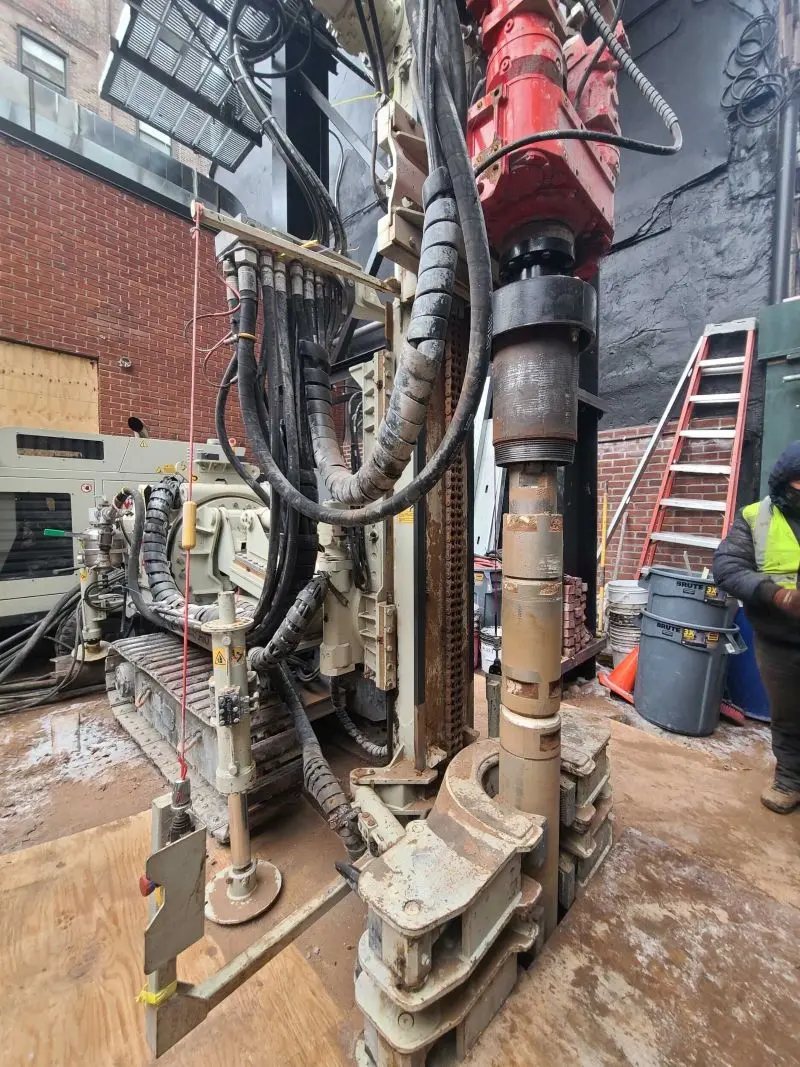
Not all geological formations or architectural layouts present identical project parameters. SJ Hauck Construction utilizes a sophisticated fleet of low-overhead hydraulic drilling machinery and custom-designed high-tensile steel reinforcements to align perfectly with the precise structural loads, soil classifications, and tight physical conditions of your job site.
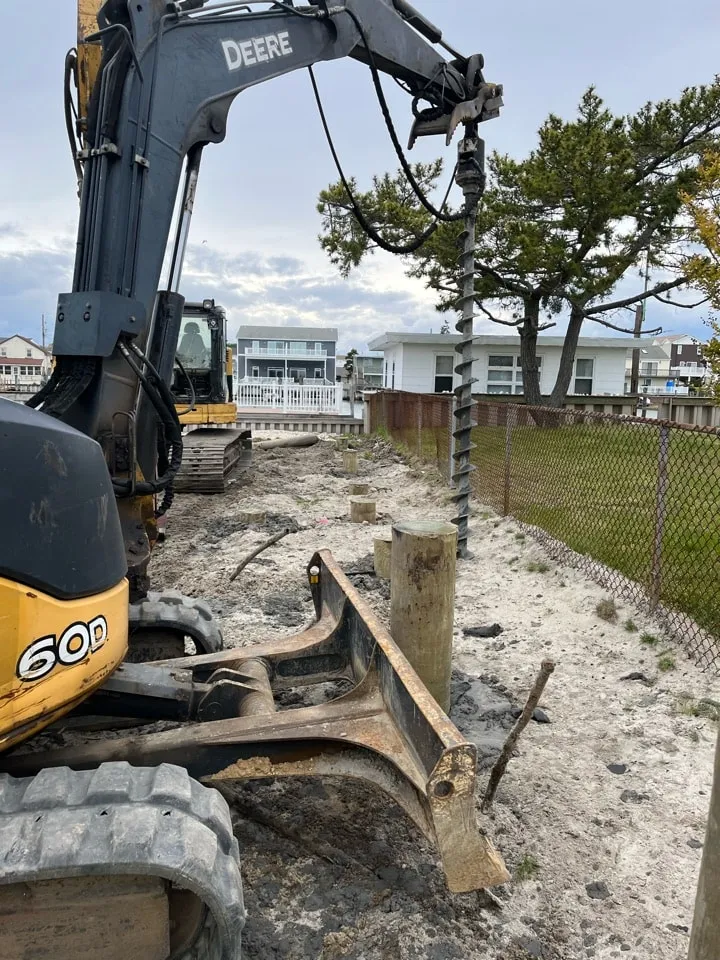
For historical preservation, commercial retrofitting, house moving, and structural elevation projects, foundations must frequently be reinforced directly beneath active or elevated structures. Traditional heavy impact driving hammers and massive truck-mounted augers cannot physically navigate these low-overhead interiors, which are frequently constrained by basements, low-clearance bridge decks, or temporary structural cribbing.
Our specialized line of cased and uncased deep foundation anchors can be advanced in modular, heavy-walled steel segments. We deploy compact, high-torque hydraulic track rigs that operate effortlessly in clearance heights as low as eight feet. These advanced rigs drill cleanly through existing footings, allowing our crews to execute a seamless micropiles installation directly under the building’s footprint without ceding valuable indoor space or threatening the upper load paths of the existing superstructure.
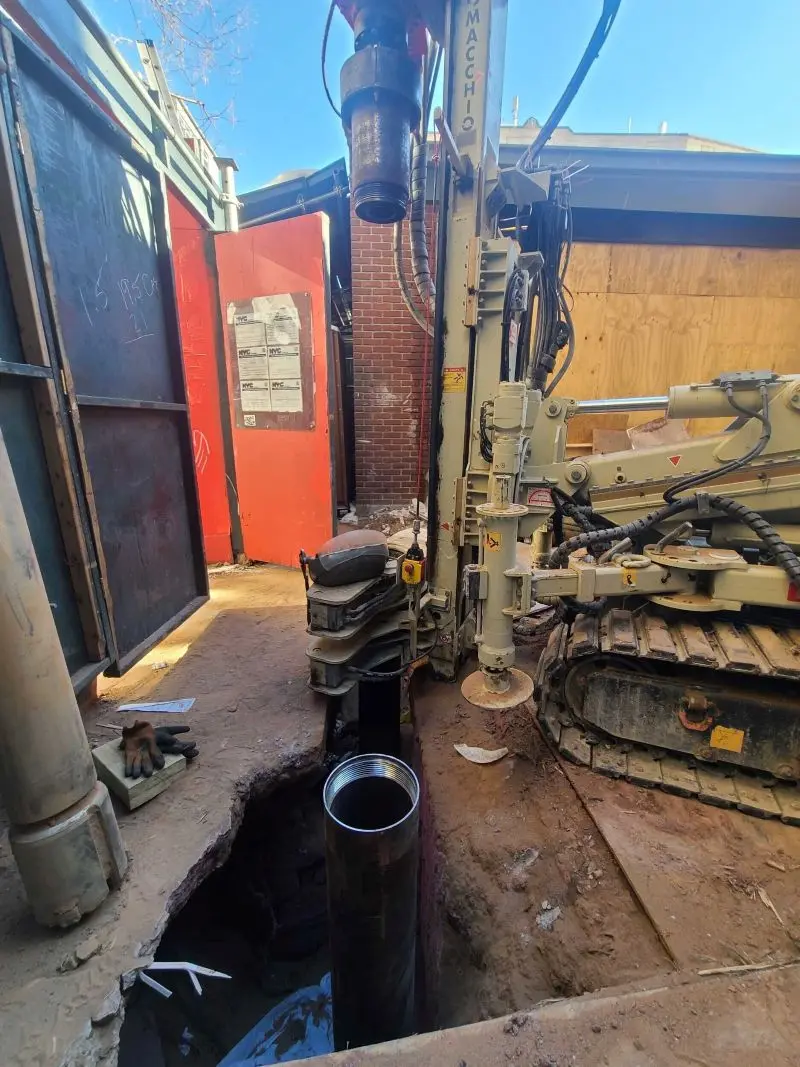
Subsurface profiles across the Northeast corridor are rarely uniform; they are frequently disrupted by boulders, glacial till, dense cobbles, and legacy building debris from centuries of urban development. Where traditional displacement piles are deflected or destroyed by subterranean obstructions, micropiles excel as a replacement pile system.
Our specialized drilling systems cut directly through solid concrete obstructions, historic timber mats, and heavy masonry blocks down to deep, load-bearing strata. Once the targeted depth is achieved, high-tensile steel bars or thick-walled casings are encapsulated in high-strength cementitious grout under pressure. This specialized form of micropiles construction provides an exceptional skin-frictional bond along the soil-to-grout interface, delivering immense axial compression and tension resistance even in the most unforgiving geologies.
Choosing specialized micropile engineering over traditional driven or large-diameter cast-in-place systems provides several critical mechanical and logistical advantages for high-complexity structural projects:
Zero-Vibration Subsurface Advancement
Unlike heavy impact hammers that send severe shockwaves through the earth, micropiles are advanced smoothly using hydraulic rotary and percussive drilling. This entirely eliminates the risk of structural settlement, settlement cracking, or structural damage to closely adjacent neighboring homes, zero-clearance commercial properties, or sensitive municipal infrastructure.
Unrivaled Tight-Access Versatility
Our specialized hydraulic rigs are engineered to pass through standard interior doorways and operate within restricted corridors. This enables interior structural modernizations, seismic retrofits, and high-load machinery foundation placements inside active facilities without halting broader business activities.
High Skin-Friction Bond Capacity
The high-pressure injection of neat cement grout fills the microscopic voids within the surrounding soil or rock matrix, creating an exceptionally high bond coefficient. This structural integration translates to supreme performance under multi-directional loading, effortlessly anchoring structures against upward tension forces and high gravity loads.
Corrosion Resistance in Aggressive Soil Matrixes
To protect the core steel reinforcement from brackish groundwater tables, coastal environments, and acidic soils, our deep foundation systems utilize thick-walled sacrificial casings or fully encapsulated, continuously threaded steel bars. This engineering focus guarantees decades of subterranean structural performance.
The following table summarizes our specialized micropile configurations engineered to solve complex geotechnical constraints across diverse Northeast soil profiles:
| Pile Configuration / Design | Primary Installation Mechanism | Noise / Vibration Impact | Typical Depth Range | Key Structural Advantage |
|---|---|---|---|---|
| High-Strength Cased Micropiles | Hydraulic Rotary Drill with Casing Advancement | Negligible / Minimal Ground Disturbance | 30’ – 150’ | Exceptional lateral stiffness and bending resistance; ideal for high-load urban structures and lateral earth retention. |
| Uncased Threaded Bar Anchors | Open-Hole Rotary Drilling with Pressure Grouting | Negligible / Extremely Low | 20’ – 120’ | Superior skin-frictional bond capacity along bedrock interfaces; optimized for high-tension anchoring and uplift control. |
| Composite Shaft Configurations | Cased Overburden Drilling with Bare Rock Sockets | Low to Moderate | 40’ – 200’+ | Combines upper shaft lateral resistance from steel casing with extreme end-bearing axial compression within bedrock sockets. |
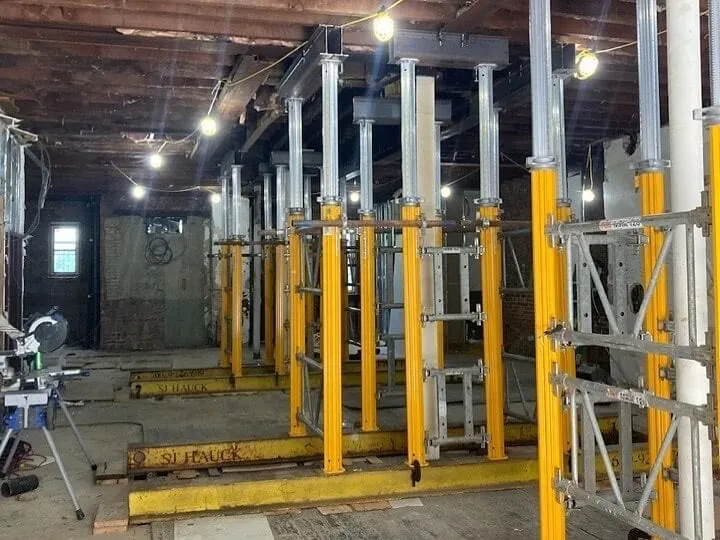
Geological anomalies, high coastal water tables, and strict municipal building regulations dictate structural deep foundation designs. As premier geotechnical construction specialists, SJ Hauck Construction brings decades of logistical mastery and specific engineering experience navigating the diverse, challenging soil profiles of the Northeast corridor.
While standard contractors can drill a shaft into the earth, SJ Hauck Construction approaches deep foundations from a position of total structural mastery. We don’t just execute tasks; we engineer complete stabilization solutions for the most unforgiving commercial environments in the Northeast.
Here is why commercial developers, structural engineers, and industrial project managers trust us with their foundations:
Dual Expertise in Lifting and Foundation Engineering
We are premier structural relocation and house-lifting specialists. This means we possess a profound, firsthand understanding of how a building behaves above the ground, allowing us to design and execute high-load underpinning and micropiles installation sequences beneath heavy structures with flawless structural alignment.
Empirical Data Transparency
We eliminate guesswork from the subterranean environment. Every modular section and pressure-grouting sequence of our micropiles construction is tracked via calibrated digital instrumentation. You receive fully documented grout volume logs, pressure matrices, and drilling torque ratings mapped directly to your project’s engineered load requirements for absolute compliance verification.
Frictionless Regulatory Navigation
We thrive in highly regulated municipal zones. Whether navigating strict NYC building codes, complex NJ Uniform Construction Code (NJUCC) frameworks, or delicate FEMA flood plain guidelines, our team manages the compliance hurdles that frequently stall unaccredited contractors.

Driven displacement piles require massive crane-mounted impact hammers that create severe noise and intense ground vibrations, posing an immediate risk of settlement or crack propagation to adjacent historic structures and shared party walls. Micropiles, by contrast, are replacement piles advanced via smooth hydraulic rotary drilling. They cut cleanly through soil profiles without generating destructive shockwaves, minimizing noise footprints, and making them safe for zero-clearance property lines.
Standard continuous flight augers (CFA) or driven timber systems frequently fail or deflect when encountering heavy subterranean obstructions like granitic boulders, historic stone masonry footings, abandoned concrete slabs, or dense glacial till. Micropiles utilize high-powered percussive or diamond-tipped bits to core directly through these obstructions. This prevents project delays and eliminates the need for mass excavation, allowing the pile shaft to reach its target end-bearing stratum securely.
Engineers verify micropile capacity by analyzing a combination of end-bearing geometry on solid rock and the high skin-friction achieved during pressure grouting. During the installation process, our specialized crews monitor real-time drilling resistance to confirm the pile has keyed into competent strata. Additionally, the volume and pressure of the injected cementitious grout are strictly monitored and logged to mathematically verify that the bond zone meets or exceeds the specified compression, tension, and structural safety limits.