Deep excavation in dense urban centers or constrained site envelopes presents one of the highest-risk phases in commercial construction. Removing vast amounts of earth fundamentally alters lateral earth pressures and hydrogeological balances. Uncontrolled ground movement can quickly result in foundation settlement, severe structural cracking, or catastrophic collapse of neighboring assets.
To safeguard nearby structures, general contractors and developers rely on custom-engineered support of excavation (SOE) protocols. SJ Hauck Construction integrates proven structural moving principles with advanced geotechnical engineering to ensure ultimate site stability. By maintaining precise load-path control, we protect both your bottom line and adjacent properties during complex earth retention projects.
The Primary Risks of Deep Excavations Near Neighboring Structures
Exhuming deep soil profiles removes the natural lateral resistance that nearby buildings rely on for equilibrium. As soil stresses shift, neighboring structures can experience both vertical and horizontal displacements.
Understanding these primary mechanisms of ground movement is essential for designing effective structural defense strategies.
Lateral Soil Movement
When earth is removed, soil behind the excavation boundary naturally expands and relaxes toward the open pit. This horizontal relaxation destabilizes nearby shallow foundations, causing structural distress and load shifts.
Subsidence and Foundation Settlement
Removing soil weight causes lateral earth relaxation, which induces vertical settlement in surrounding soils. If neighboring footings sit inside this settlement trough, the structure experiences severe downward movement.
Differential Settlement
Uneven ground settlement occurs when one portion of a building sinks faster than the rest. This creates severe shear forces within beams, masonry walls, and framed structures, leading to compromised structural integrity.
Hydrogeological and Water Table Shifts
Uncontrolled dewatering lowers the surrounding groundwater level. This increases the effective stress on underlying soils, accelerating consolidation settlement beneath neighboring properties.
Core Engineering Solutions for Deep Excavations
Protecting adjacent investments requires matching site-specific geotechnical parameters with the proper engineered earth support systems.
| Retention System | Primary Application | Key Advantage | Soil & Boundary Compatibility |
| Soldier Piles & Lagging | Cohesive or dense soils; deep open pits | Highly adaptable, economical, fast installation | Ideal for tight urban lots with stable upper strata. |
| Sheet Pile Walls | High groundwater tables, loose sand/silt | Watertight barrier, high continuous lateral strength | Excellent for floodplains and coastal construction. |
| Underpinning & Piering | Direct footings adjacent to cut line | Transfers load directly to deeper, stable strata | Critical when cuts extend below neighbor footings. |
| Tieback & Internal Bracing | Deep cuts requiring high lateral resistance | Eliminates internal obstruction or anchors wall back | Requires utility clearance and row rights. |
Custom Support of Excavation (SOE) Retaining Systems
A tailored support system acts as a rigid wall to counteract active earth pressures and surcharge loads.
Soldier Piles and Lagging
Soldier pile systems use steel H-piles driven or drilled vertically at regular intervals along the excavation perimeter. As excavation progresses in stages, horizontal timber or precast concrete lagging is installed between the piles. This system provides reliable structural containment while allowing moisture relief through weep paths.
Interlocking Sheet Pile Walls
For sites with high groundwater tables or soft soils, interlocking steel sheet piles form a continuous structural wall. Driven deeply past the final excavation subgrade, sheet piling seals out groundwater and prevents soil washouts beneath nearby footings.
Tiebacks, Helical Anchors, and Internal Strut Bracing
When excavation depths exceed free-standing safety limits, tiebacks or internal bracing systems are added. Tieback anchors are drilled diagonally through the wall into stable soil or bedrock and grouted under high pressure. Where property lines restrict tiebacks, internal cross-lot steel struts or rakers support the wall directly.
For specialized foundations and low-clearance conditions, learn how our helical pile installation techniques anchor sites safely without high-vibration equipment.
Foundation Underpinning: Stabilizing Adjacent Structures
When an excavation cut extends deeper than neighboring footings, vertical underpinning directly reinforces the adjacent foundation. Underpinning deepens the existing footings down to or below the new excavation level.
Pit Underpinning
Traditional pit underpinning involves excavating pins or pits sequentially in brief, staged segments directly beneath the target footing. Each pit is filled with concrete and dry-packed against the existing footing underside. This extends the foundation depth downward without compromising structural stability.
Micropile and Jacked Pile Systems
When adjacent loads are extraordinarily heavy or soils are unstable, high-capacity steel micropiles are drilled through or alongside the existing footing. These small-diameter piles penetrate deep into competent bed strata to transfer foundation loads cleanly away from the excavation zone.
Needle Beam and Cantilever Transfer
In historic or fragile structures, steel needle beams are placed through temporary wall openings to carry structural loads. Loads are lifted onto temporary support towers while deeper foundation pins are poured below.
If nearby structures show existing settlement or structural instability, see our commercial shoring and underpinning strategies for complete stabilization.
Comprehensive Risk Mitigation Plan
Protecting adjacent assets requires proactive planning before the first machine arrives on-site. SJ Hauck Construction follows a strict 5-stage project control framework:
- Stage 1: Advanced Geotechnical Analysis: Perform borings, test pits, and assess adjacent footings and groundwater conditions.
- Stage 2: Pre-Construction Condition Audit: Document baseline structural conditions and existing cracks across neighboring properties.
- Stage 3: High-Accuracy Instrumentation Deployment: Install seismographs, inclinometers, and optical survey prisms.
- Stage 4: Sequential Excavation & Installation: Execute excavation in controlled benching phases to maintain continuous balance.
- Stage 5: Real-Time Data & Quality Control: Continuously review soil telemetry and stress readouts to adjust execution on the fly.
Advanced Geotechnical Analysis
We analyze soil borings, groundwater tables, and surcharge loads from neighboring structures. This data guides numerical modeling to forecast lateral soil behavior.
Pre-Construction Audits
Our teams conduct photographic and video surveys of surrounding buildings. We log preexisting structural conditions to establish an accurate baseline and prevent false liability claims.
Real-Time Instrument Tracking
Automated monitoring systems keep high-risk sites fully transparent:
- Inclinometers: Track subsurface lateral soil movement within the excavation walls.
- Optical Survey Prisms: Measure millimeter-level vertical and horizontal movements on adjacent facades.
- Vibration Sensors (Seismographs): Monitor ground shock during pile driving or drilling to prevent impact damage.
- Piezometers: Monitor local groundwater levels to prevent settlement caused by dewatering.
Controlled Bench Excavation
Excavation is completed in benchmarked stages rather than mass removal. Bench cuts leave earth buttresses against retention walls until anchors or braces are fully stressed and locked off.
For sites requiring total site clearing alongside soil retention, review our specialized commercial demolition services for a safe transition.
The SJ Hauck Difference: Unmatched Load-Path Certainty
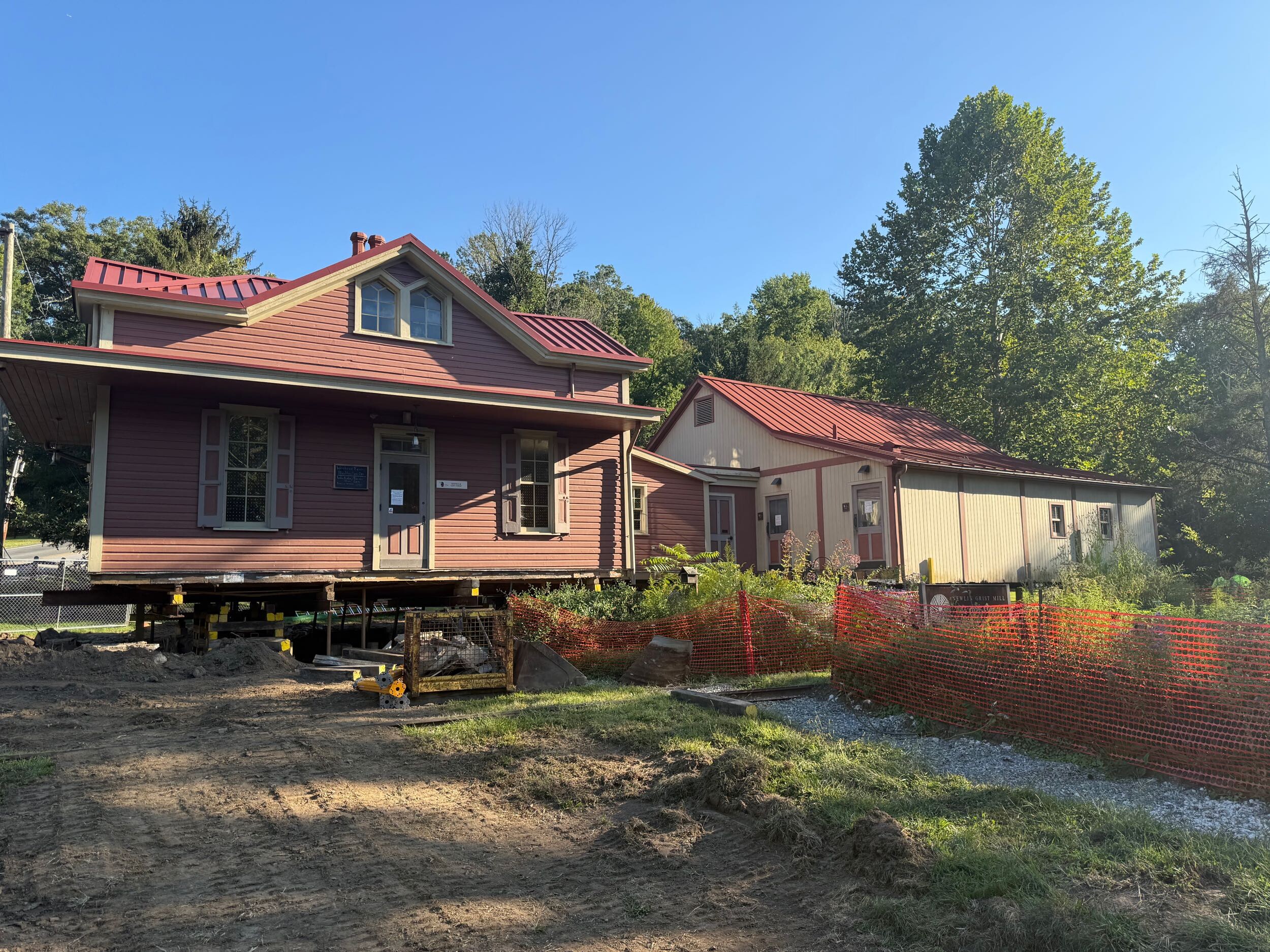
Many general foundation contractors approach earth support as simple earth retention. At SJ Hauck Construction, we evaluate deep excavations through the lens of structural movers and lifts. Having lifted and moved massive commercial buildings and historic landmarks, we understand load-path mechanics and structural behavior under stress.
Key Factors of the SJ Hauck Structural Advantage:
- Unified Soil & Load Engineering: Precise analysis of soil behavior under active lateral forces paired with real-world understanding of structural weight distribution.
- Early Contractor Involvement (ECI): Early collaboration with project engineers to value-engineer structural supports before breaking ground.
- Proven Heritage: Decades of specialized experience handling heavy structural relocation and foundation reinforcement across challenging urban sites.
Heavy Structural Legacy
We bring unmatched experience in structural weight mechanics. Our team knows exactly how buildings react when ground support shifts, allowing us to prevent movement before it occurs.
Early Contractor Involvement (ECI)
By partnering with project engineers during design phases, we identify risks early. This proactive approach reduces change orders and avoids costly construction delays.
Tailored Value Engineering
We optimize soldier pile sizing, tieback spacing, and underpinning depths to fit site-specific soil conditions. This ensures complete structural safety without over-designing budget items.
Read about our successful execution on high-stakes sites, such as the historic Atlantic City Presbyterian Church structural preservation project.
Frequently Asked Questions (FAQs)
What is the difference between shoring and underpinning?
Shoring uses temporary or permanent retention walls (such as soldier piles or sheet piles) to hold back soil and prevent lateral movement during excavation. Underpinning physically extends an existing structure’s foundation deeper into the ground to provide permanent direct vertical support.
How do you prevent ground vibration from damaging adjacent historic buildings?
We use low-impact installation methods, such as drilled micropiles or press-in helical piles, in place of impact hammer pile driving. Continuous seismograph monitoring alerts crews instantly if vibration levels approach safe threshold limits.
What happens if an optical prism detects movement on a neighboring facade?
Our monitoring protocols establish clear threshold criteria:
- Green (Normal): Proceed with standard construction operations.
- Amber (Action Threshold): Construction slows down while engineers inspect the site and verify support structures.
- Red (Stop Work): Excavation pauses immediately while additional tiebacks, struts, or underpinning supports are installed.
Is support of excavation required for every deep pit project?
SOE is required whenever soil cuts exceed OSHA slope limits or sit near property lines, roadways, utilities, or adjacent structures where sloping is impractical.
Partner with the Deep Excavation and SOE Specialists
Deep excavations do not have to jeopardize adjacent properties or derail project timelines. Partnering with an experienced specialty contractor ensures total site safety, structural stability, and seamless regulatory compliance.
At SJ Hauck Construction, we bring unmatched structural expertise and engineered precision to every earth retention project.
Protect your structural investment today. SJ Hauck Construction to consult with a geotechnical structural expert and schedule an early-stage site evaluation.