
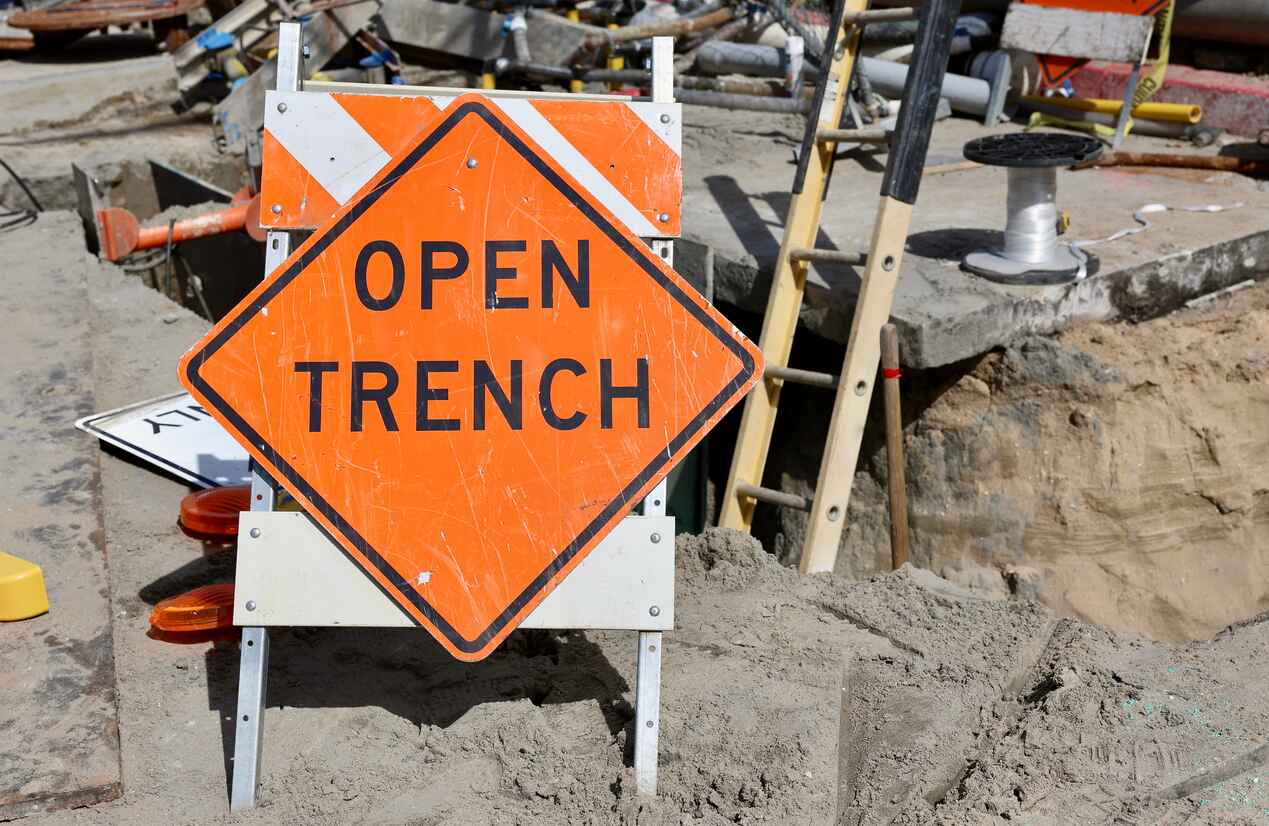
Excavation work is one of the most hazardous activities performed on a construction site. Whether crews are installing underground utilities, repairing sewer lines, or preparing a commercial foundation, trench walls can fail with little to no warning if they are not properly supported.
OSHA developed 29 CFR Part 1926 Subpart P to reduce these hazards by establishing clear legal triggers for trench safety, including exactly when protective systems are mandatory.
The danger is massive and immediate. A single cubic yard of soil can weigh between 2,000 and 3,000 pounds, roughly the weight of a compact car dropping in a split second. When a trench wall collapses, workers can become trapped or crushed within seconds, making proper planning, soil testing, and protective systems critical on every jobsite.
Whether you are managing a shallow utility trench or a complex basement excavation, working with an experienced shoring contractor ensures your project stays structurally sound, compliant, and on schedule.
Understanding OSHA Subpart P
OSHA’s excavation standard establishes minimum safety requirements for all trenching operations. The regulation is designed to protect workers from cave-ins, falling loads, hazardous atmospheres, and structural failures.
Rather than forcing contractors into one single protective method, OSHA allows employers to choose from several approved systems:
- Temporary shoring (hydraulic aluminum shores or timber shoring)
- Sloping (cutting back the trench walls at a safe angle)
- Benching (stepping the trench walls vertically, where permitted)
- Trench shields (steel or aluminum shield boxes)
The appropriate solution depends entirely on depth, soil stability, and surrounding environmental factors.
When Does OSHA Mandate Temporary Shoring?
Many contractors assume there is a single depth where shoring automatically becomes mandatory. While depth is a major trigger, OSHA also requires safety measures based on site hazards regardless of how deep you dig.
1. Excavations 5 Feet or Deeper
OSHA mandates a protective system for any trench 5 feet (1.52 meters) or deeper. Once an excavation hits 5 feet, workers cannot enter until protection is fully installed. Acceptable options include shoring walls, trench boxes, sloping, or benching.
Crucial Rule: Spatial Depth Averaging Is Prohibited
You cannot average trench depths along an excavation run. If a 60-foot utility trench varies from 3 feet deep to 5.5 feet deep at one end, mandatory cave-in protection applies to every section that hits or exceeds 5 feet.
2. Excavations Under 5 Feet Deep
A shallow trench under 5 feet is not automatically exempt. If the site’s Competent Person identifies any indication of potential ground instability, OSHA requires protective systems regardless of depth. Key warning signs include:
- Surface tension cracks near the top edge
- Active groundwater seepage or pooling
- Nearby traffic or heavy machinery vibration
- Loose fill material or previously disturbed backfill
3. Stable Rock: The Only True Exception
The single exemption to the cave-in protection rule applies when an excavation is made entirely in intact Stable Rock. However, if the rock displays jointing, fractures, weathering, or water seepage, it loses its stable status and requires immediate protective support.
Soil Classification: Why Unstable Type C Soil Changes Everything
Before anyone steps into a cut, OSHA requires a designated Competent Person to classify the soil. Soil reacts dramatically under pressure, and a trench that stays upright today can collapse tomorrow under rain or traffic weight.
OSHA categorizes soils into four distinct stability levels under Appendix A to Subpart P:
- Stable Rock: Natural solid mineral material that stays vertical without support.
- Type A Soil: Highly cohesive soils like clay or silty clay. However, Type A soil is automatically downgraded to Type B or C if it experiences heavy vibration, fissures, water seepage, or previous digging.
- Type B Soil: Moderately stable soils including angular gravel, silt, sandy loam, and previously disturbed earth.
- Type C Soil (Highest Risk): Loose, non-cohesive materials like sand, gravel, submerged soil, or ground with water freely seeping through it.
The Rules for Type C Soil
Because Type C soil has very little internal strength, it presents the highest collapse risk:
- Benching is strictly prohibited. You cannot stair-step Type C soil.
- Support is required immediately. You must either slope the walls back at a wide, flat angle (1.5H:1V), install vertical shoring walls, or place a trench shield box.
Mandatory Field Testing
A Competent Person cannot classify soil by visual inspection alone. OSHA requires at least one visual test and one manual field test, such as a thumb penetration test (seeing how easily a thumb sinks into undisturbed soil) or using a pocket penetrometer tool.
Everyday Hazards That Trigger Mandatory Safety Controls
Protection extends beyond stopping cave-ins. Secondary jobsite hazards also trigger mandatory OSHA requirements:
- Safe Egress (The 4-Foot Rule): In trenches 4 feet deep or more, workers must have a secured ladder, ramp, or stairway located within 25 feet of lateral travel.
- Spoil Setback (The 2-Foot Rule): Excavated dirt piles and heavy equipment must be kept at least 2 feet back from the trench edge to prevent loose material from rolling back into the cut.
- Water Accumulation: Working in standing or seeping water is prohibited without dewatering pumps, specialized shield systems, and continuous monitoring.
- Air Quality Testing: Deep cuts (4 feet or deeper) near landfills, gas lines, or sewers require pre-entry air testing for oxygen deficiency or hazardous gases.
When Engineered Excavation Shoring Systems Become Mandatory
While standard OSHA tables or manufacturer data work for standard cuts, deeper or more complex jobs require custom engineering.
Under 29 CFR 1926.652, any excavation deeper than 20 feet (6.1 meters) requires an excavation shoring system designed and approved directly by a Registered Professional Engineer (RPE).
Custom RPE-engineered designs are also required for:
- Excavations adjacent to existing building foundations or retaining walls
- Complex urban sites with heavy underground utility crossings
- Deep sheeting and lagging or soldier pile installations
Stamped engineering drawings and calculations must be kept on the jobsite at all times during construction.
Facing complex ground conditions or tight clearances? Speak With a Shoring Specialist
Don’t Overlook Local Building Codes and Financial Risks
While federal OSHA sets the safety floor, municipal agencies (such as city building departments) enforce strict local structural codes.
Ignoring shoring rules or local permit codes brings severe financial risks:
- Heavy OSHA Penalties: Citations for missing trench support frequently fall under “Willful Violations,” with fines reaching over $160,000 per violation.
- Immediate Stop-Work Orders (SWO): Local building inspectors can freeze site operations for weeks if unpermitted digging or missing shoring plans endanger adjacent structures.
- Third-Party Property Damage: Un-shored trenches can cause ground settlement, cracking nearby pavements or foundations. General liability insurance policies often deny coverage if safety codes were bypassed.
Best Practices for Site Safety Compliance
- Conduct Daily Inspections: The Competent Person must inspect the trench before every shift, after rainstorms, and after any event that increases hazard potential (like heavy blasting or freeze-thaw cycles).
- Document Everything: Keep written logs of daily inspections, soil classification test results, weather changes, and stamped engineering plans.
- Maintain Immediate Stop-Work Authority: Ensure your Competent Person has the explicit authority to halt work and evacuate the trench the moment ground movement or water seepage is detected.
Protect Your Crew and Project with SJ Hauck Construction
Trenching safety comes down to early planning and structural execution. Whether you are dealing with deep utility cuts, tight urban sites, or unstable ground conditions, SJ Hauck Construction provides the structural expertise and engineered support systems required to keep your jobsite safe and compliant.
From custom temporary shoring and driven sheet piling to expert foundation underpinning, our team ensures your excavation meets all OSHA mandates and local building codes without costly project delays.
Planning an upcoming excavation or requiring expert shoring support? Contact SJ Hauck Construction today to consult with our structural shoring specialists.
Frequently Asked Questions
Yes. OSHA requires protective systems whenever a Competent Person identifies ground instability, active water seepage, surface cracking, or heavy equipment vibration, regardless of excavation depth.
An RPE is legally required to design and stamp protective systems for any excavation deeper than 20 feet, as well as for excavations that undercut adjacent building foundations or require custom support structures.
Local building codes do not replace federal OSHA rules, but they often add stricter requirements, such as mandatory engineering plan reviews, specialized permits, and structural monitoring for neighboring properties.