Support of Excavation (SOE) | SJ Hauck Construction

Before a single vertical beam is placed, the integrity of the site must be absolute. We specialize in neutralizing the volatile forces of compression, tension, and lateral earth pressure through custom-engineered SOE systems. Serving New Jersey, New York, Pennsylvania, and Delaware, SJ Hauck Construction manages the high-stakes, high-risk phases that define a project’s long-term structural viability through our core contractor services.

Our approach goes beyond simple earth retention; we provide a stabilized environment that allows general contractors and developers to proceed with confidence. By integrating advanced geotechnical engineering with heavy-civil execution, we secure your site against soil migration, hydrostatic pressure, and the unique geological stressors found throughout the Northeast corridor.

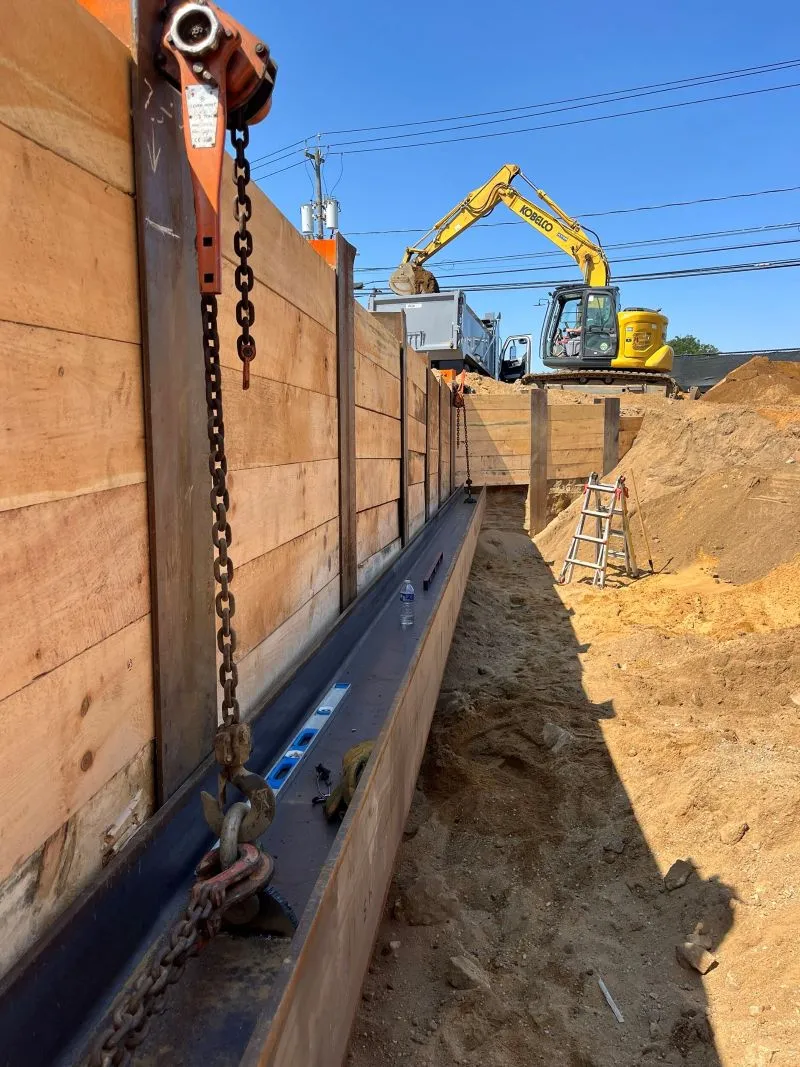
Deep trench excavation site showing timber lagging retaining walls, steel beams with chain hoist equipment, and a yellow Kobelco excavator working in the background.
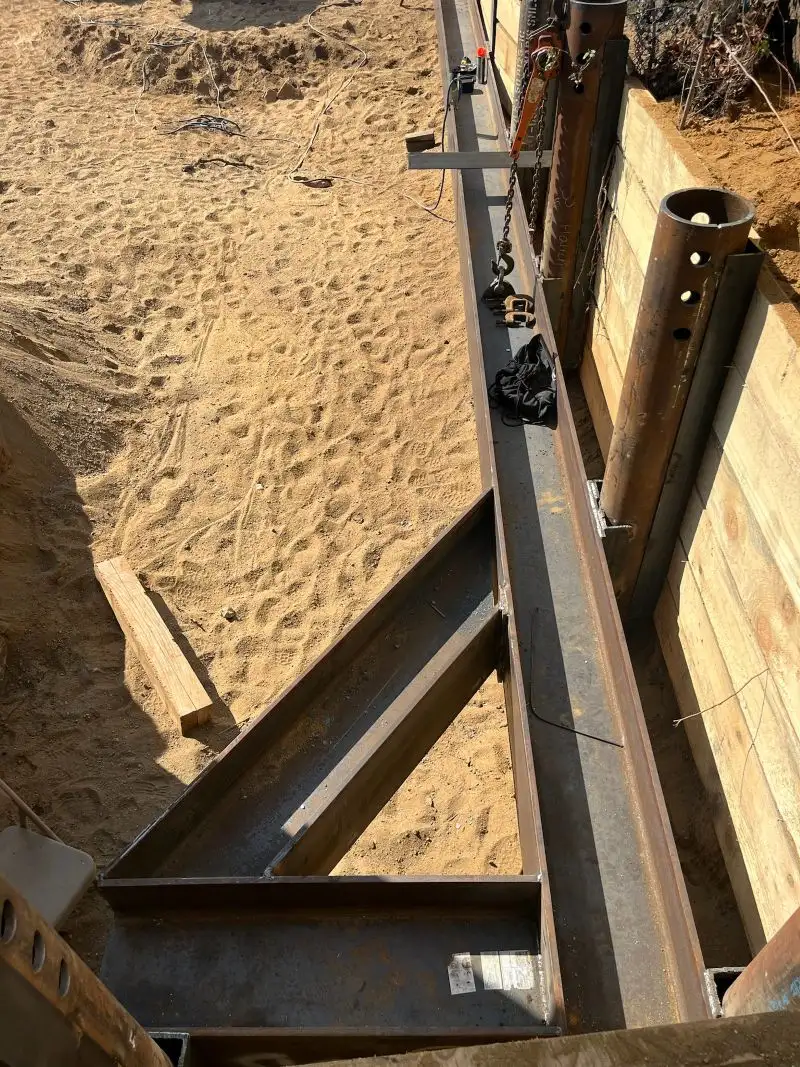
Overhead view of a steel shoring and bracing framework installed along a sandy excavation pit next to a wooden retaining wall.

Experts in Regional Geological Challenges

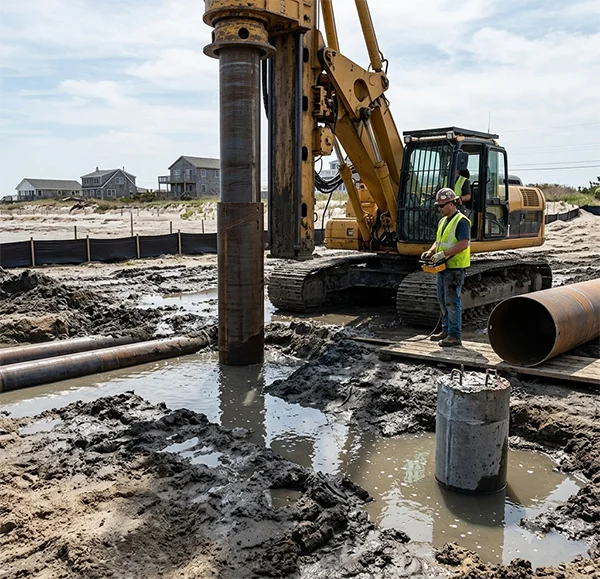
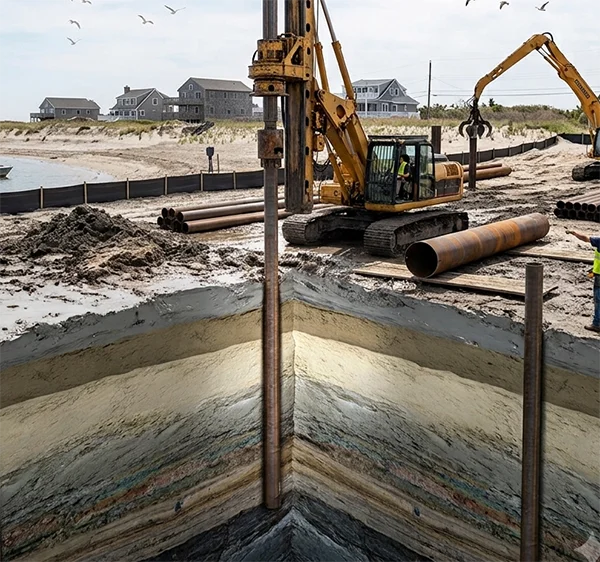
We understand the unique geological challenges of the Mid-Atlantic. From the clay-heavy soils and high water tables to the dense urban constraints of Manhattan and Philadelphia, our team utilizes both displacement and replacement piling methodologies to navigate the region’s toughest sites.

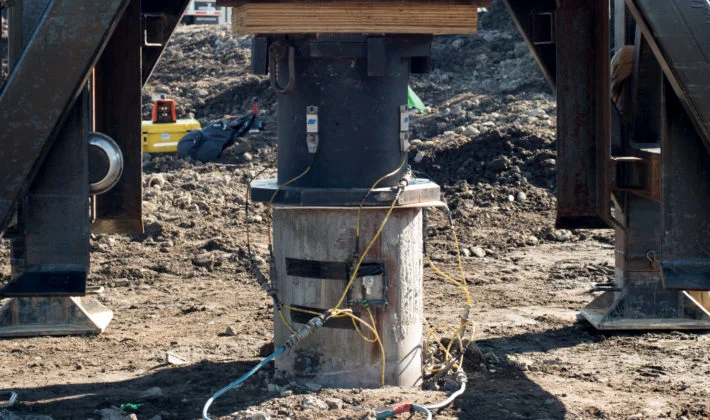
Our process includes prioritizing precision through rigorous subsurface investigation and Non-Destructive Testing (NDT). To ensure performance, we use advanced methods such as Pile Dynamics Analysis (PDA) to verify bearing capacity and pile integrity before construction proceeds.

Why Engineered SOE is Non-Negotiable

In the Northeast’s dense urban environments and challenging coastal geologies, Support of Excavation is the “temporary muscle” that prevents soil movement. It is a dynamic engineering solution that must account for soil-structure interaction, hydrostatic pressure, and the protection of adjacent infrastructure.

Home Icon

Ensure Workplace Safety

Maintain structural integrity to provide a safe, hazard-free environment and prevent cave-ins.

Construction Icon

Protect Adjacent Infrastructure

Stabilize foundations of neighboring buildings, roadways, and utilities against lateral soil pressure.

Foundation Icon

Mitigate Regional Risks

Address the clay-heavy soils and high water tables. Experts in the conditions of coastal Delaware and New Jersey.

Property Protection Icon

Legal Compliance

Meet NYC Administrative Code and NJ Uniform Construction Code mandates for protecting neighboring property during deep excavation.

Our SOE Capabilities & Methods

We don’t just clear the way; we provide load-path certainty that general contractors and site-work firms cannot match. Our approach is backed by rigorous subsurface investigation and engineered data.

Soldier Pile and Lagging

The most versatile and rapid SOE method for deep excavations in varying soil conditions. Vertical steel H-piles are installed at regular intervals, with horizontal lagging inserted between them to retain soil as excavation progresses.

Use Case: Best for sites with stable soil above the water table where cost-efficiency and speed are priorities, such as inland commercial foundations or parking garage excavations.

Sheet Piling

Interlocking steel sheets are driven into the ground to create a continuous, relatively water-tight barrier. This is the preferred method for waterfront structures or excavations in saturated sands where groundwater cutoff is critical.

Use Case: The preferred method for waterfront structures, cofferdams, or excavations in saturated sands where groundwater cutoff is critical to prevent site flooding.

Secant and Tangent Walls

For sites with high water tables or where extreme rigidity is required to protect adjacent structures, we install overlapping (secant) or touching (tangent) reinforced concrete piles.

Use Case: Essential for deep excavations immediately adjacent to heavy historic buildings or high-vibration-sensitive infrastructure, where soil movement must be near zero.

Tiebacks and Internal Bracing

To resist immense lateral earth pressures, we utilize:

  • Tiebacks: High-strength steel tendons grouted into stable ground behind the wall, leaving the interior excavation clear.
  • Internal Bracing: Strategic use of wales and struts to provide horizontal reinforcement in deep or narrow cuts.

Use Case: Ideal for large, open-span excavations where an unobstructed interior is needed for equipment movement.

SOE Methods At a Glance

Choosing the correct SOE method is a balance of soil mechanics, groundwater levels, and the proximity of neighboring structures. Use the table below to identify which system aligns with your project requirements.

Method Primary Function Best Use Case Key Advantage
Soldier Pile & Lagging Vertical H-piles with horizontal timber/steel lagging. Inland commercial foundations and multi-level parking garages. Most cost-effective and rapid installation for stable soils.
Sheet Piling Interlocking steel sheets driven to create a continuous wall. Waterfront structures, cofferdams, and high-groundwater sites. Provides a superior water-tight seal for saturated sands.
Secant & Tangent Walls Overlapping (Secant) or touching (Tangent) concrete piles. Deep excavations adjacent to historic buildings or vibration-sensitive sites. Maximum wall stiffness; eliminates soil movement and protects neighbors.
Tiebacks & Internal Bracing Lateral reinforcement using grouted anchors or steel struts. Tiebacks: Open-span pits.
Bracing: Narrow cuts or lot-line builds.
Tiebacks keep the excavation floor clear for heavy machinery.
Soil Nailing Reinforcing the soil mass with grouted "nails" and shotcrete. Highway cuts, temporary steep slopes, and tunnel portals. Flexible and can be installed in restricted-access areas.
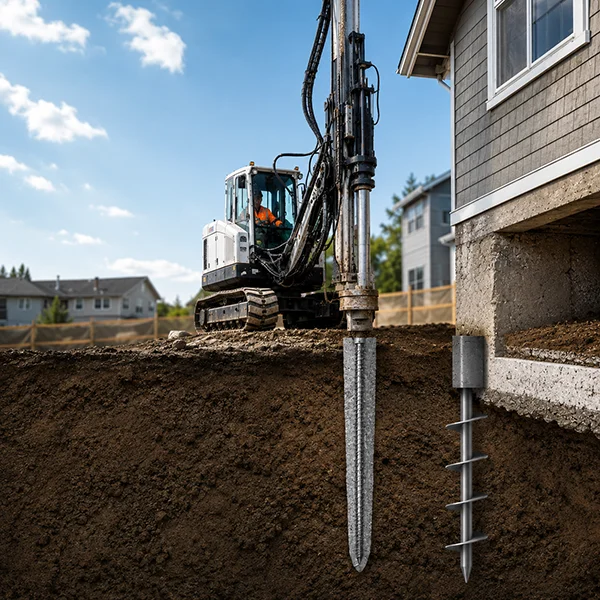
Underpinning / Helical Piles Extending existing foundations to a deeper, stable stratum. Building additions or stabilizing structures next to new deep cuts. Directly transfers existing building loads to deeper soil or rock.

Featured Project: 88 Parkway Drive (Hauppauge, NY)

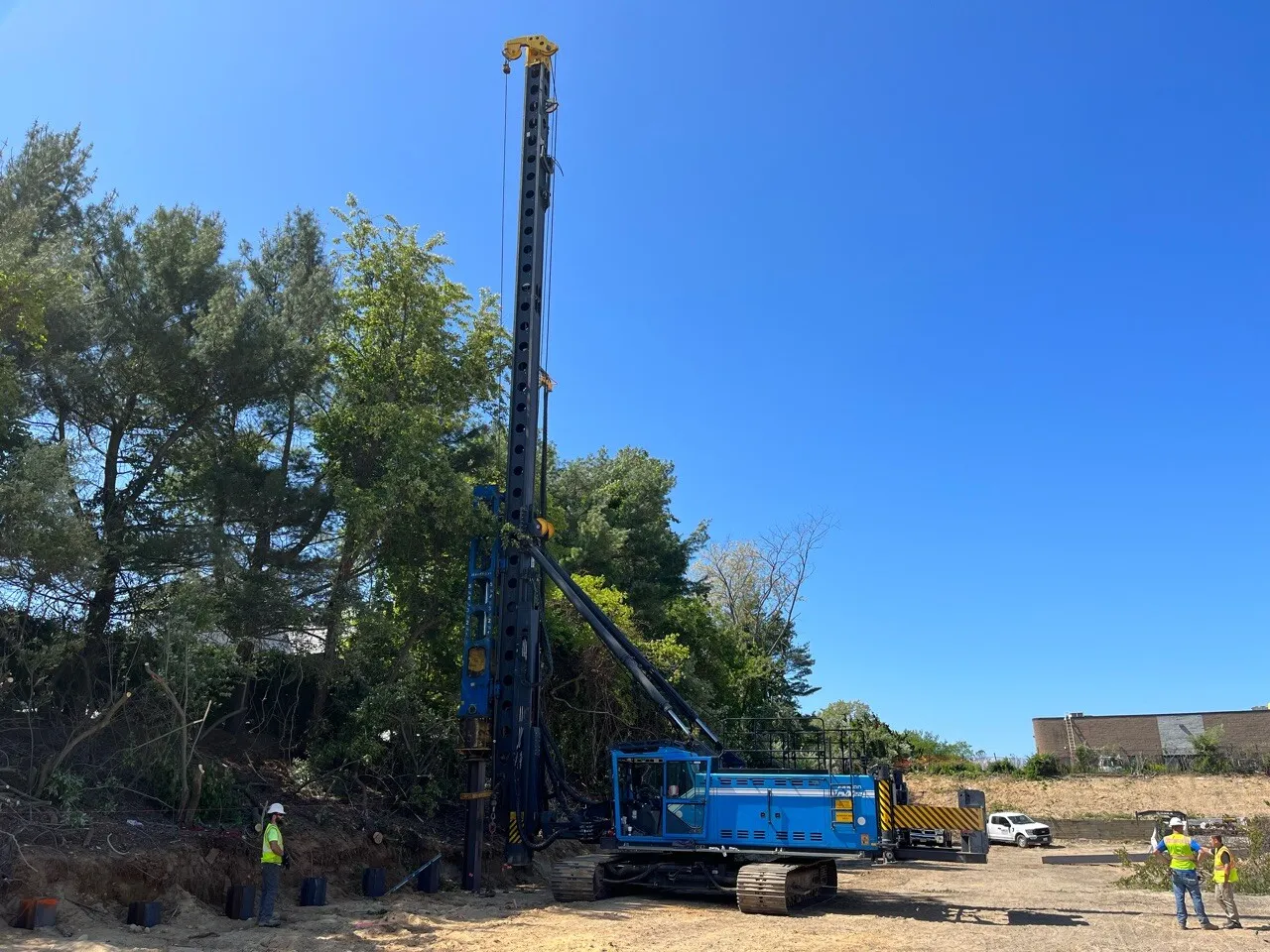
SJ Hauck Construction completed a critical SOE project for ARCO Design, installing a robust steel beam and lagging system to stabilize the site for a new commercial building.

A tall drilling rig next to a wooded area, with workers in safety vests nearby.

The SJ Hauck Advantage: Structural Authority

Our unique expertise is forged from our history of lifting and relocating thousands of structures. This gives us a deep-rooted understanding of how buildings behave under pressure—knowledge we apply to every SOE project we touch.

Surgical Precision

We manage high-risk phases with a level of precision derived from high-level structural moving.

Early Contractor Involvement

We identify project risks early—such as soil conditions and load requirements—to optimize cost and schedule.

PE-Stamped Reliability

Our design staff provides shop drawings, PE-stamped plans, and “means and methods” documentation for full regulatory compliance.

A tall drilling rig next to a wooded area, with workers in safety vests nearby.

Northeast Geological Challenges for SOE

In the Mid-Atlantic, subsurface conditions vary drastically. We tailor our piling methodologies to overcome the specific hurdles of each landscape:

Frequently Asked Questions

What is the difference between SOE and shoring?

“Support of Excavation” (SOE) is the comprehensive engineering term for the entire system designed to protect the sides of a cut. Shoring is a primary component of that system, acting as the temporary reinforcement to prevent soil movement.

In most Mid-Atlantic jurisdictions, if an excavation is deeper than an adjacent foundation, the SOE design must be signed and sealed by a Professional Engineer. We provide all required PE-stamped submittals.

We prioritize precision through rigorous subsurface investigation and can utilize Non-Destructive Testing (NDT) and monitoring instruments like inclinometers to track movement in real-time.

Yes. For sites with high water tables, we utilize water-tight solutions like secant pile walls or steel sheet piling to ensure a dry and stable work area.